
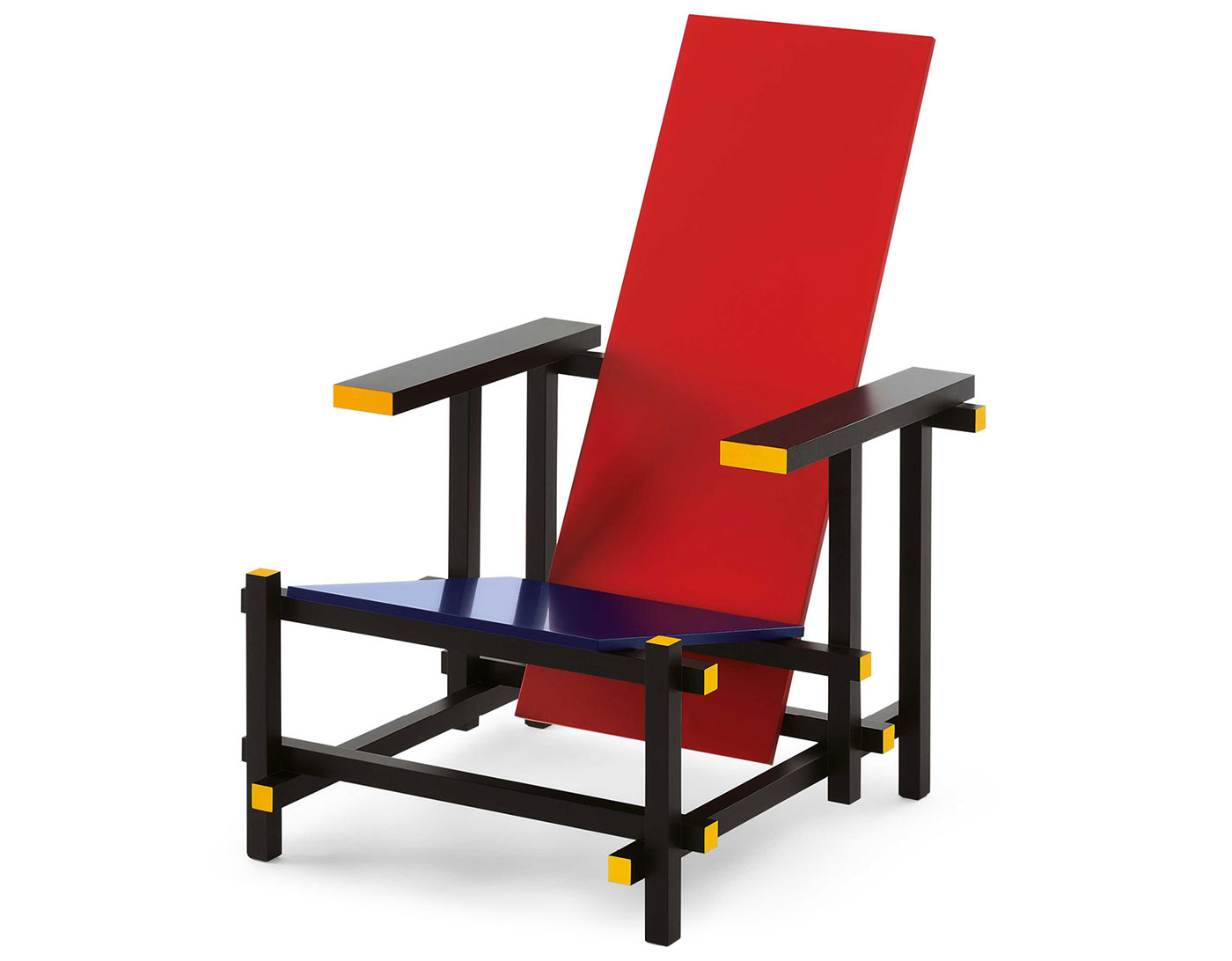
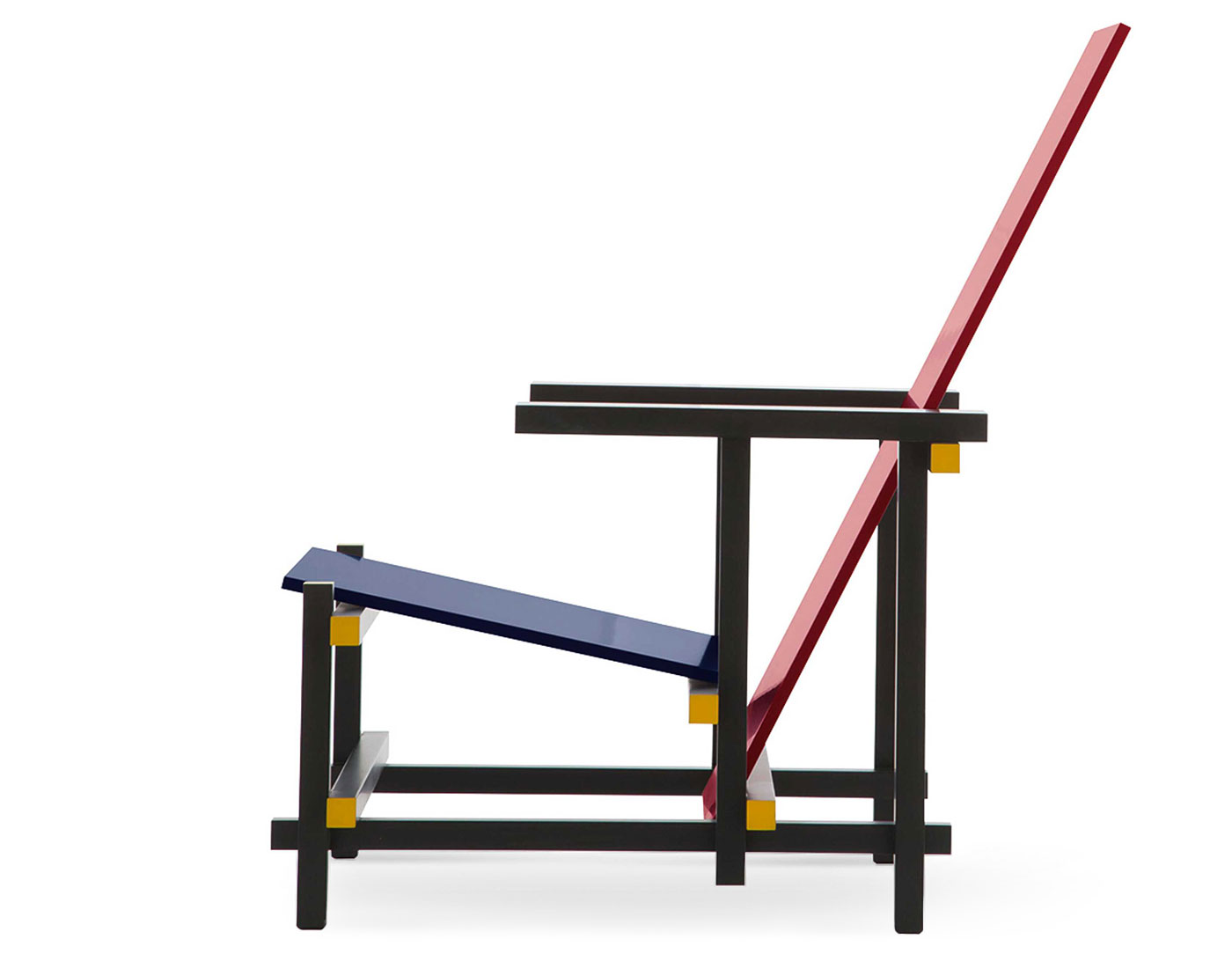
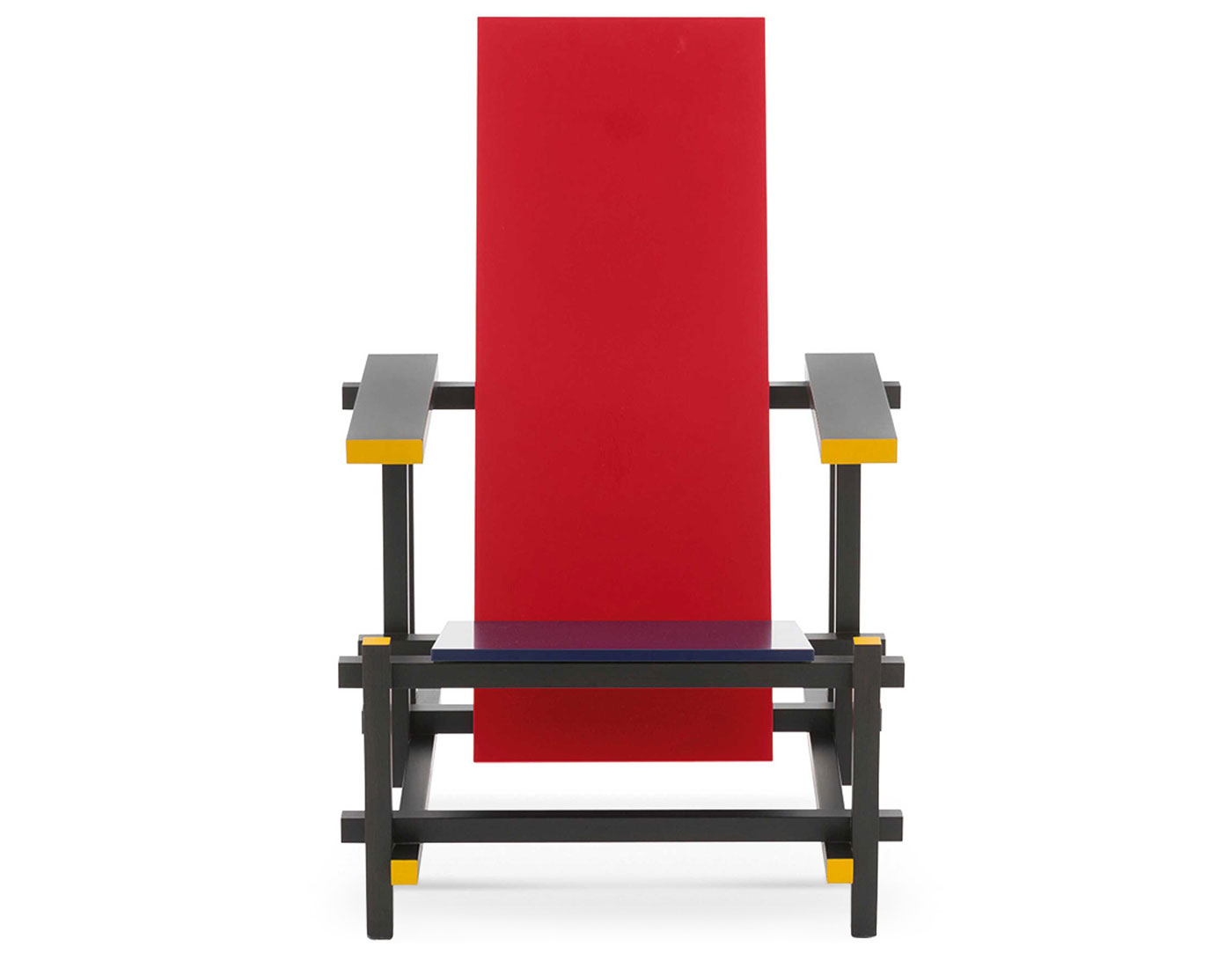
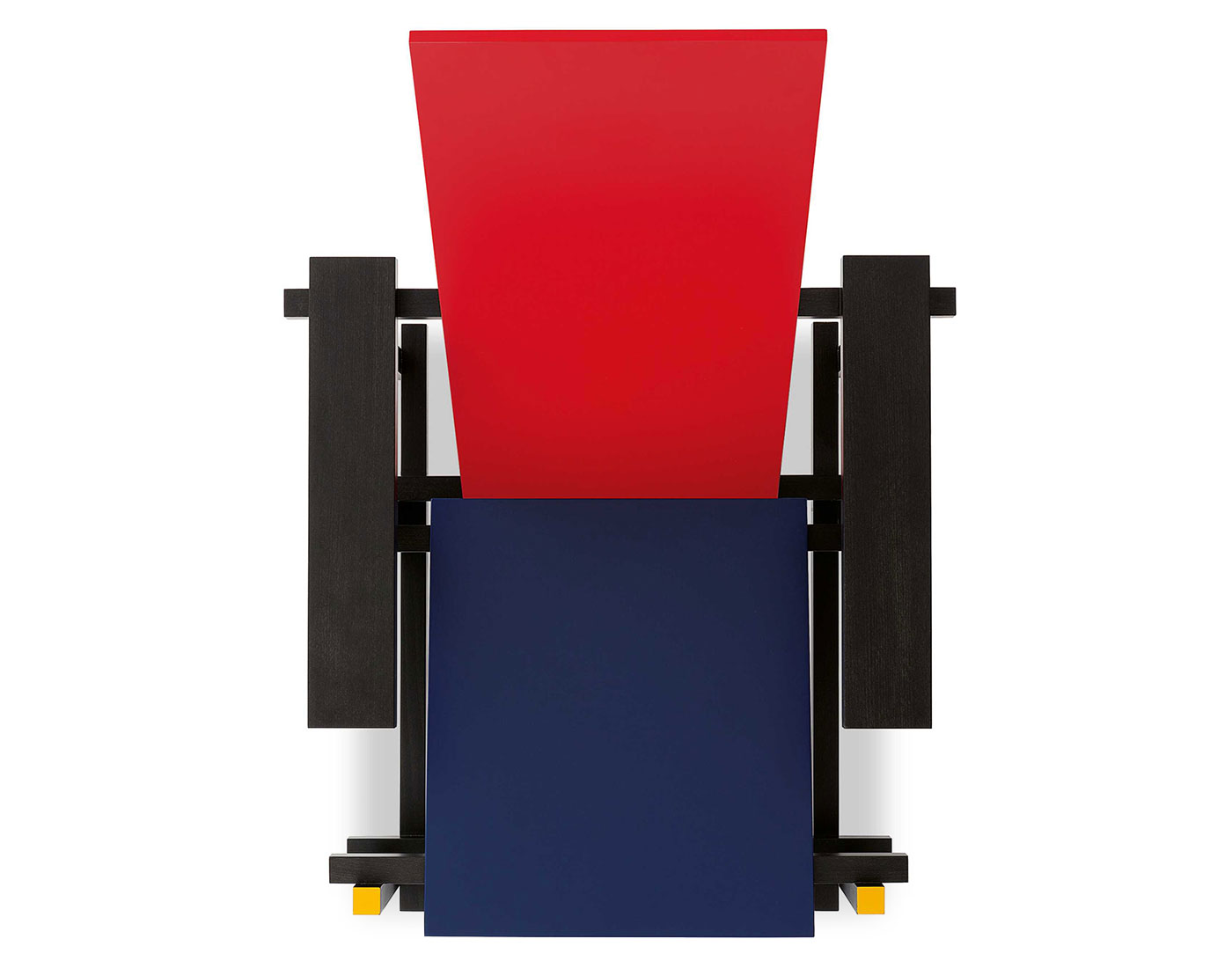
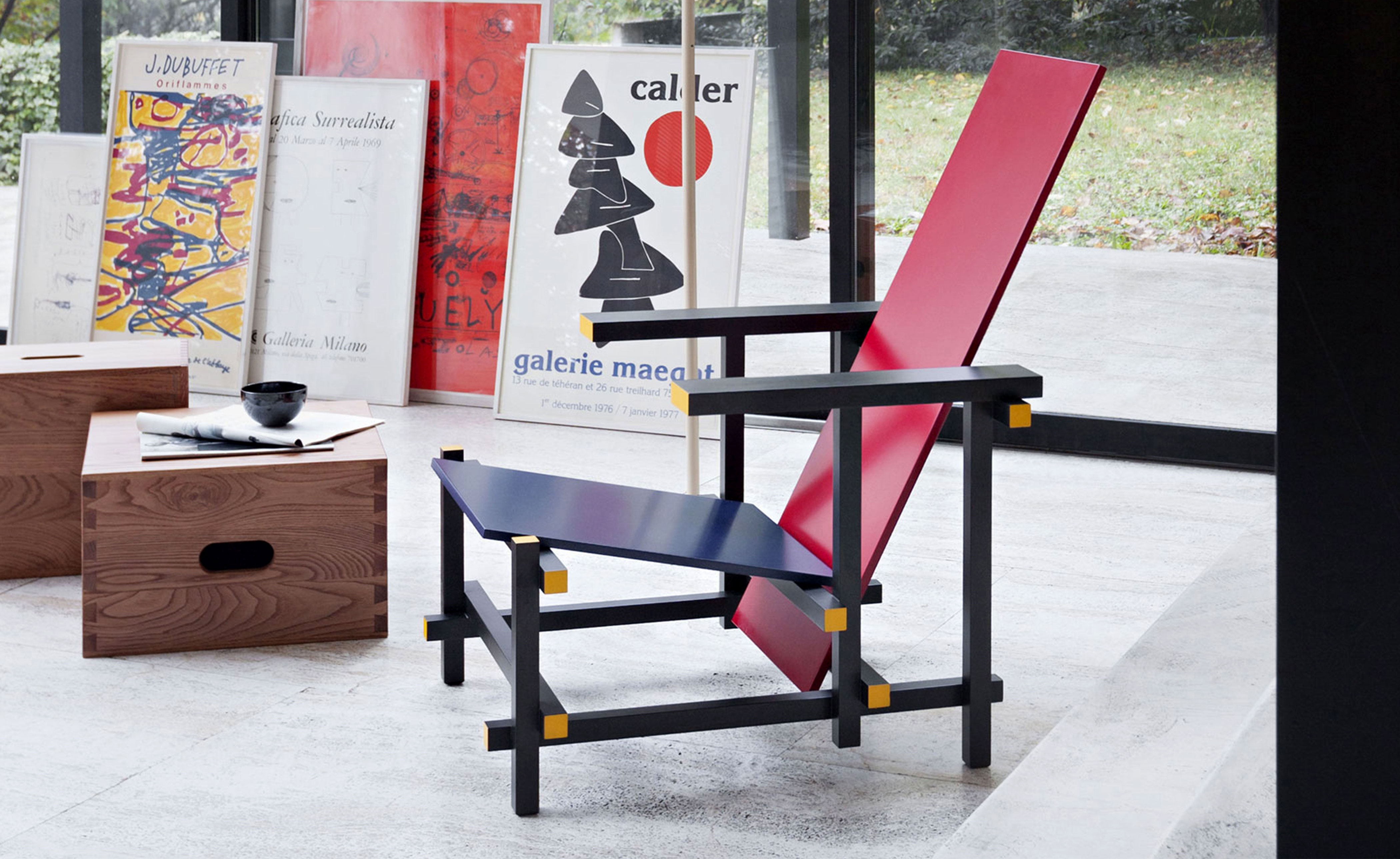
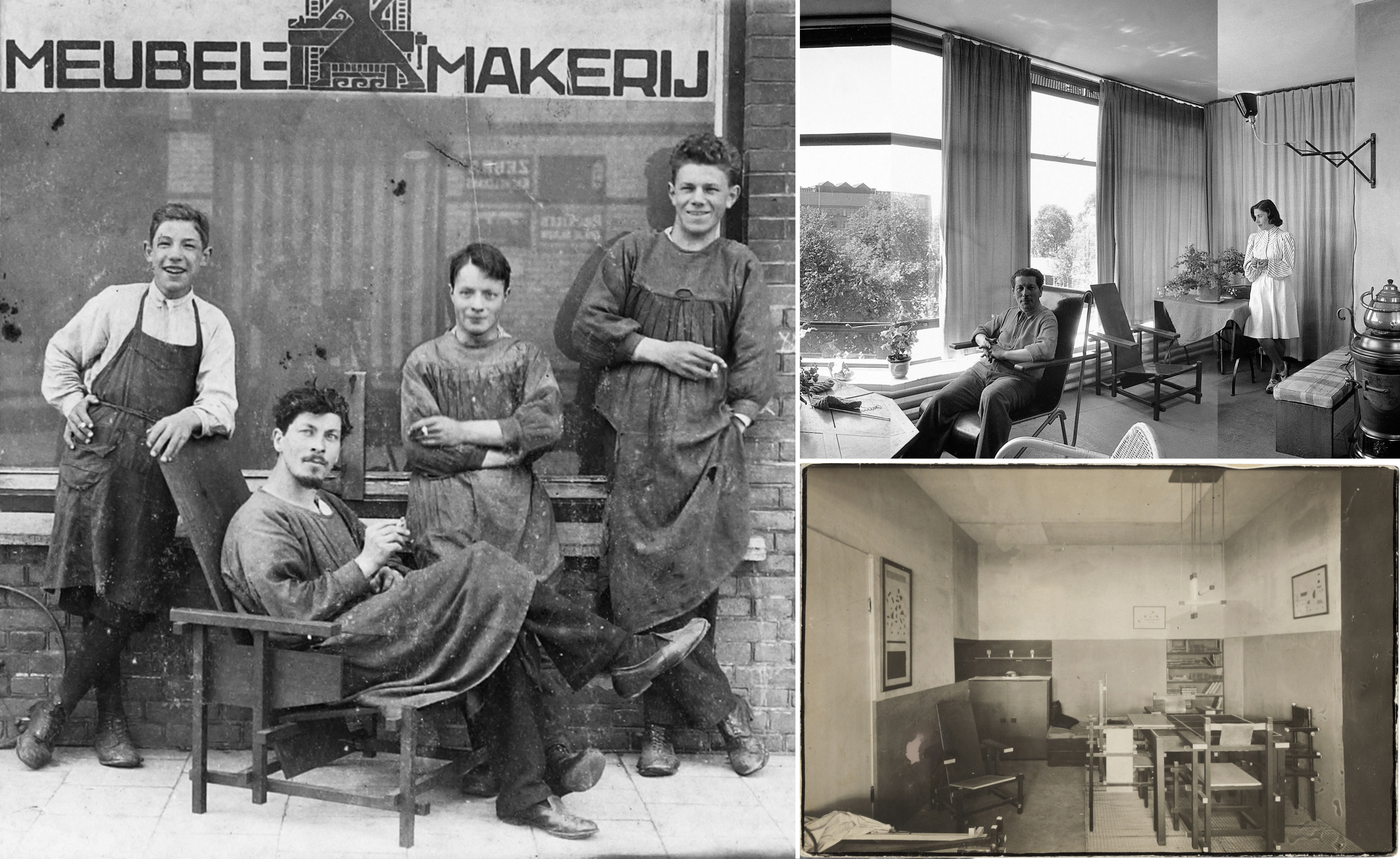
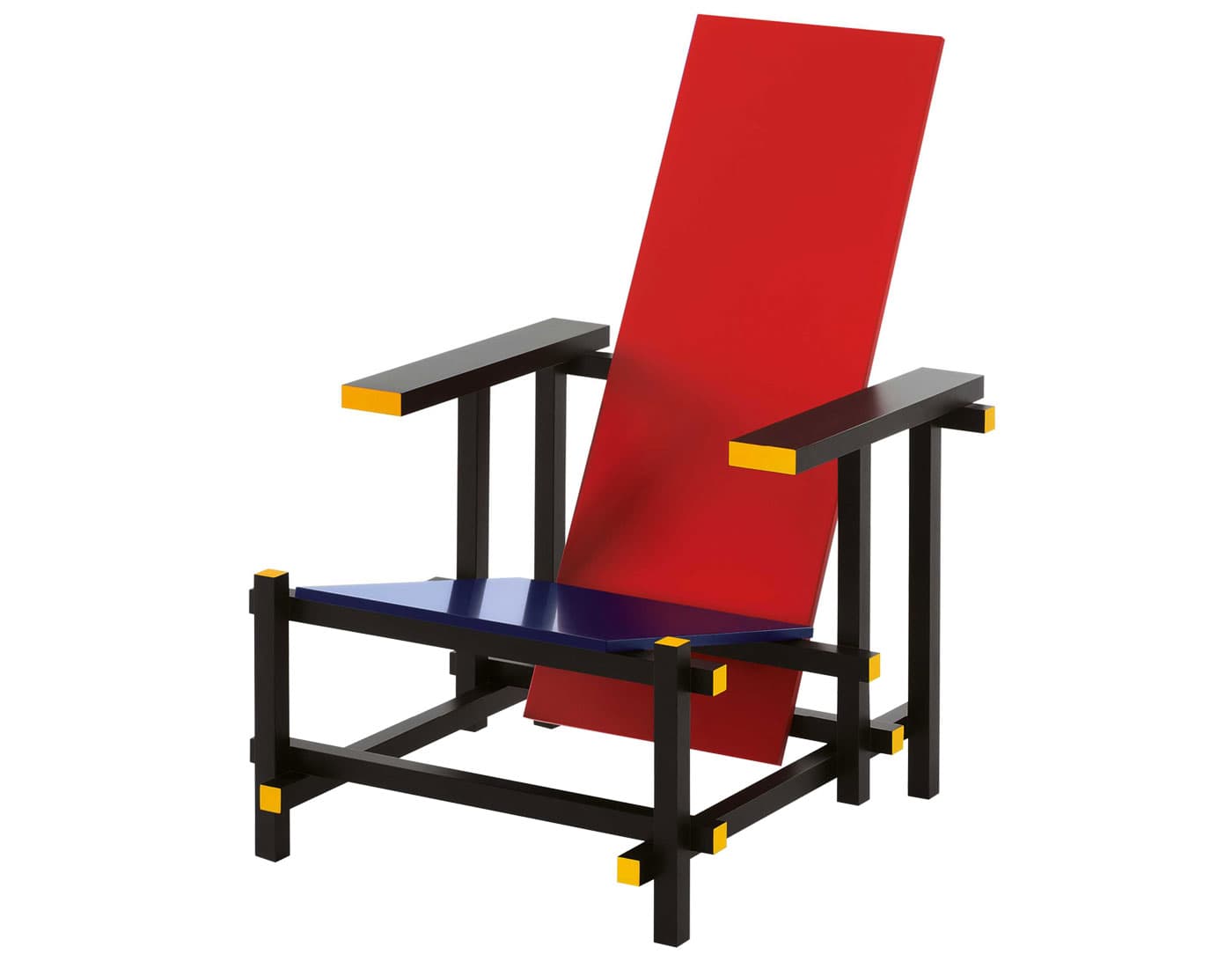
A sculptural seat with a pure and rationalist form, this chair became an authentic Manifesto for Neoplasticism, embraced by the Dutch De Stijl movement in 1917. An outlook shared by Piet Mondrian, whose objective was to seek out the essential nature of things, combined with the harmonious equivalence of colors, and the use of right-angle.
Rietveld produced his first prototypes in 1918, expressing the philosophy of organizing space using the same colors for similar components. He later applied this same approach to separate out constructional elements according to their function. Thus the base was black, and the seats colored. As a consequence, the name of the piece changed, from Slat Chair to Red and Blue.
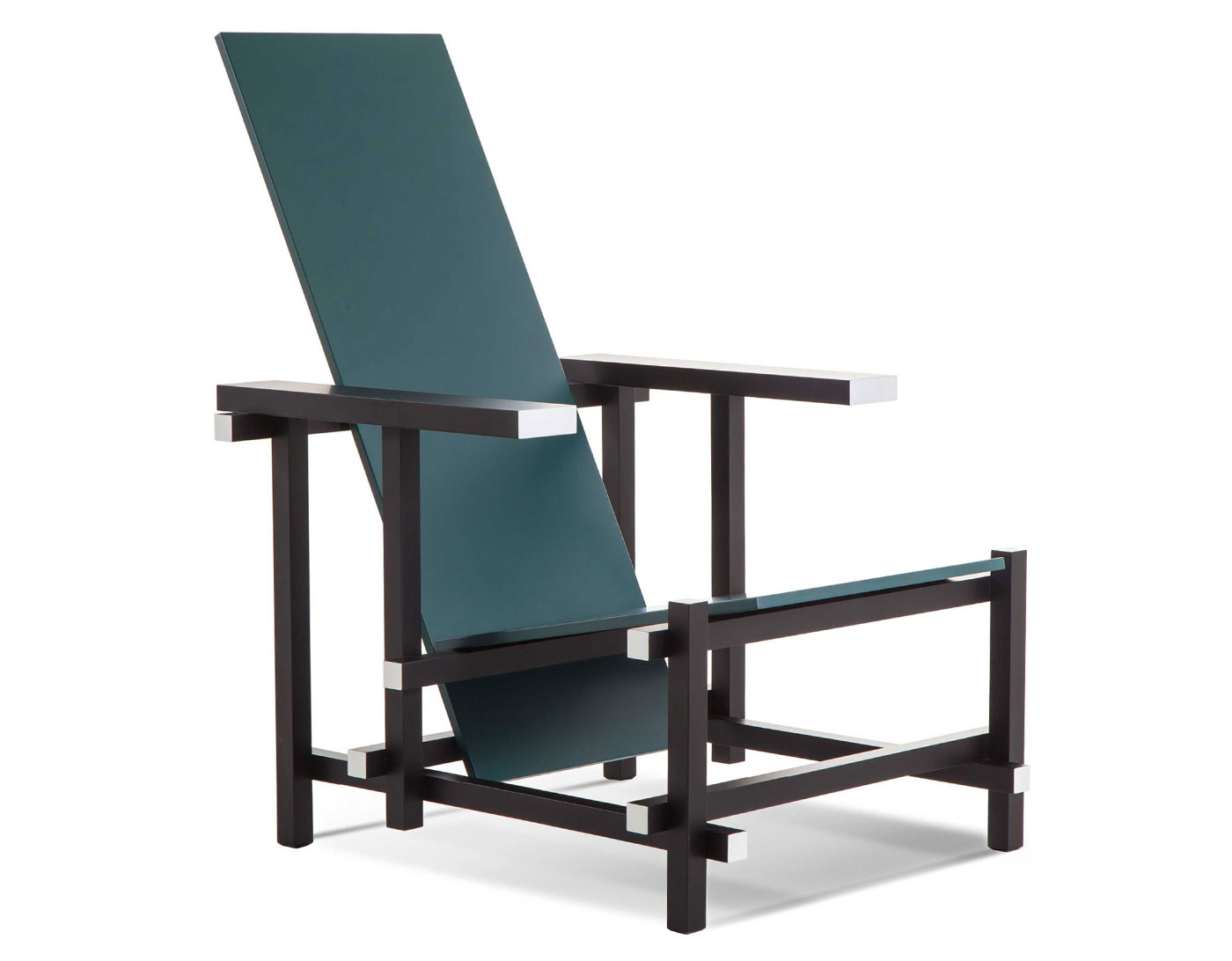
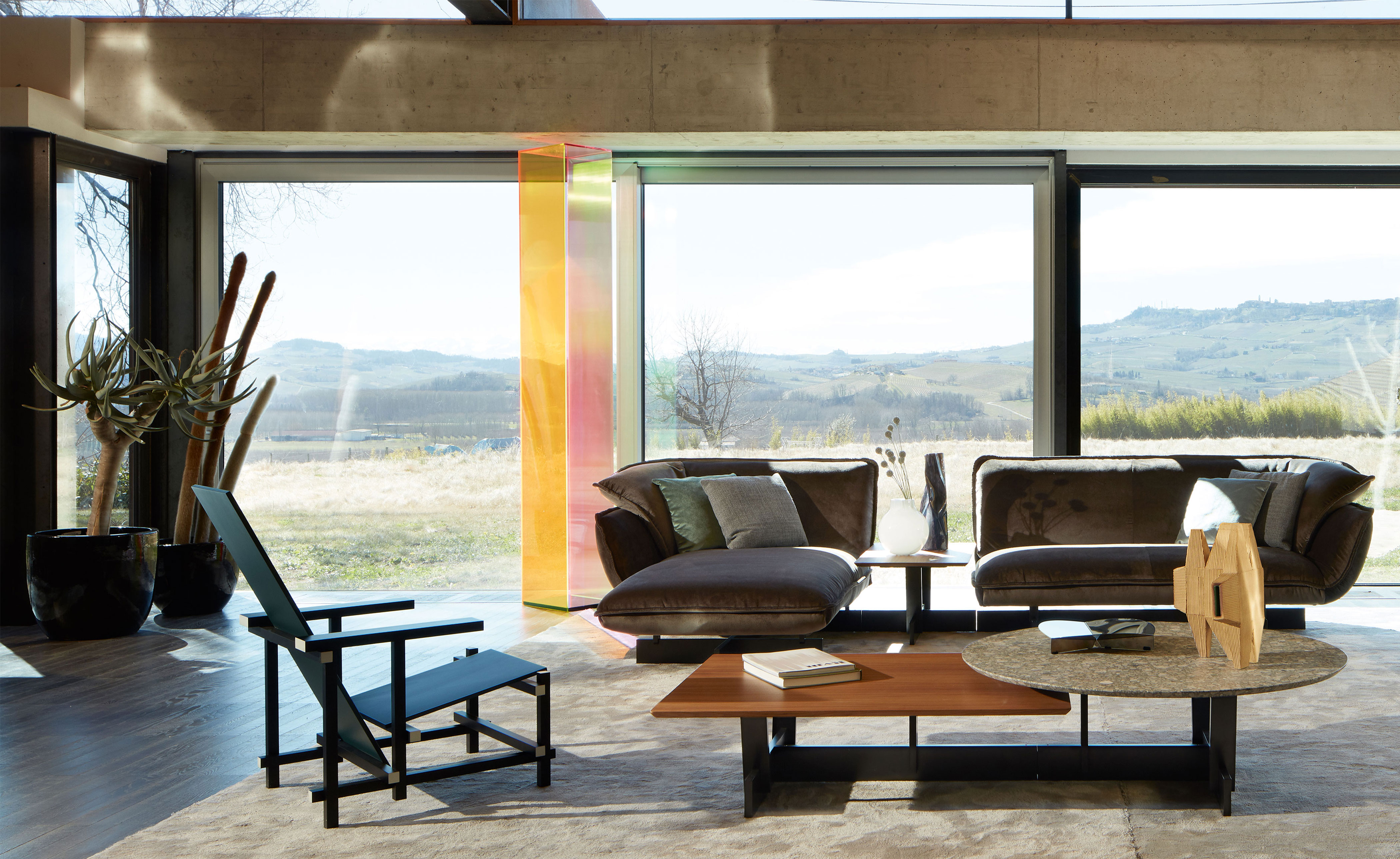
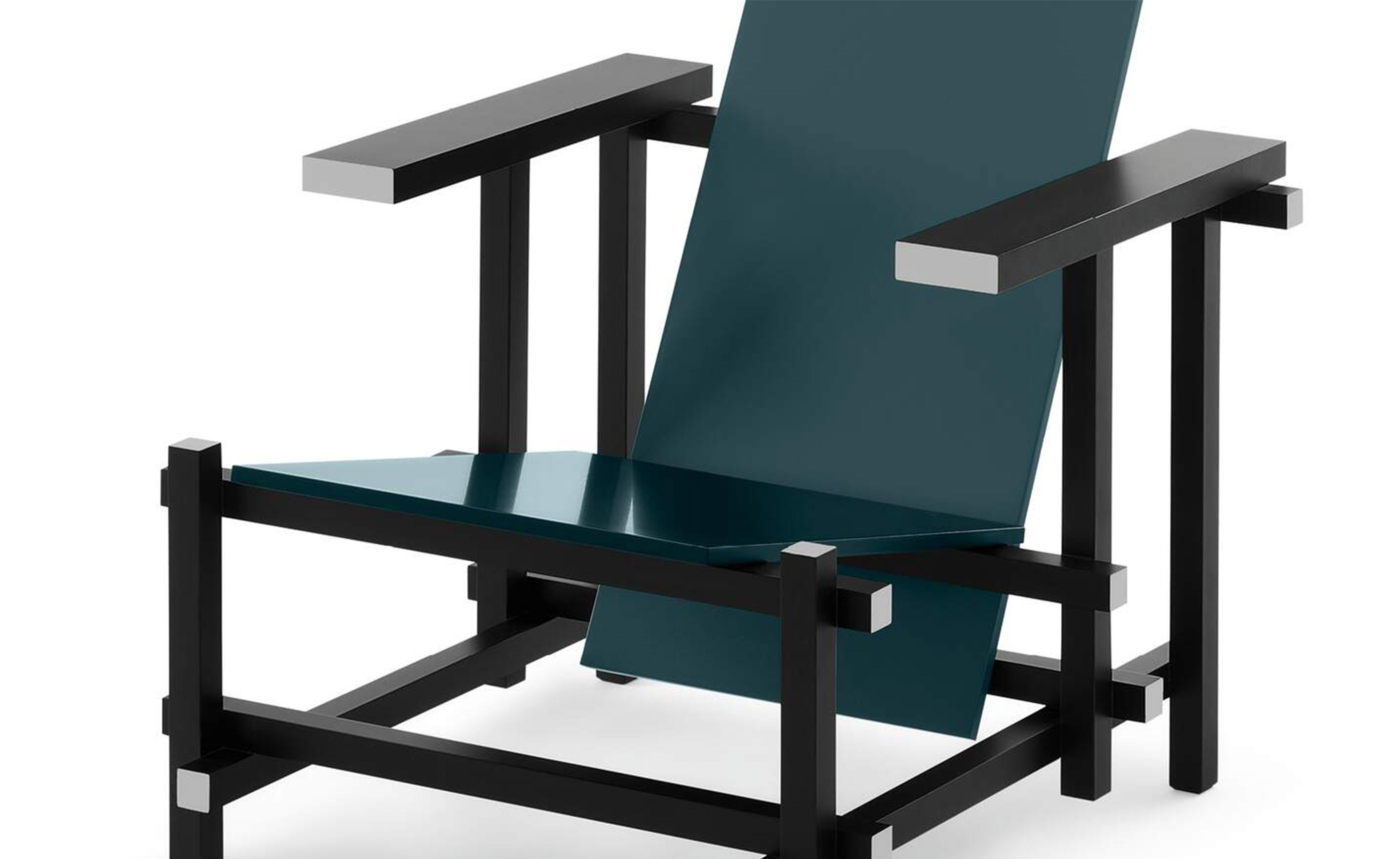
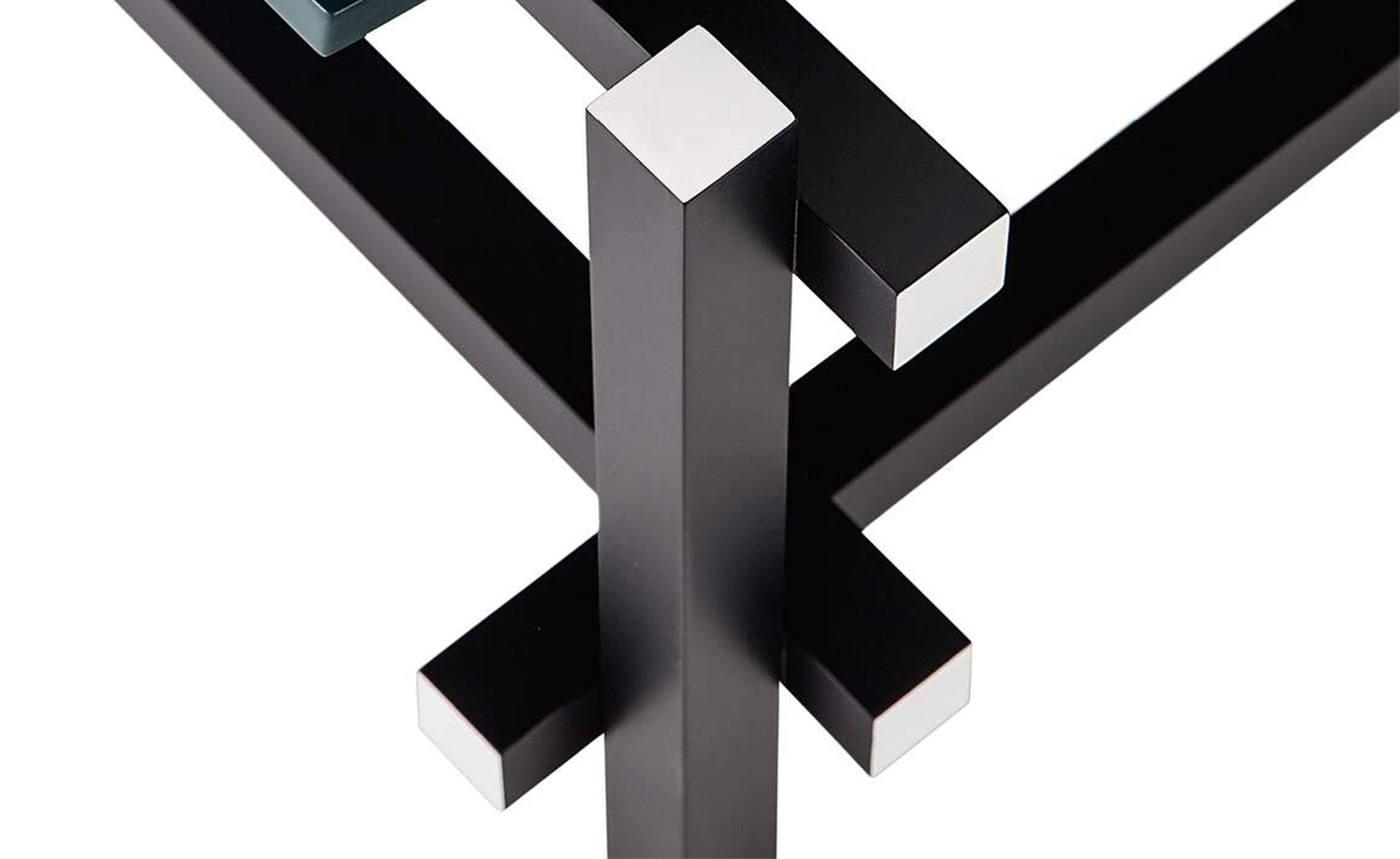
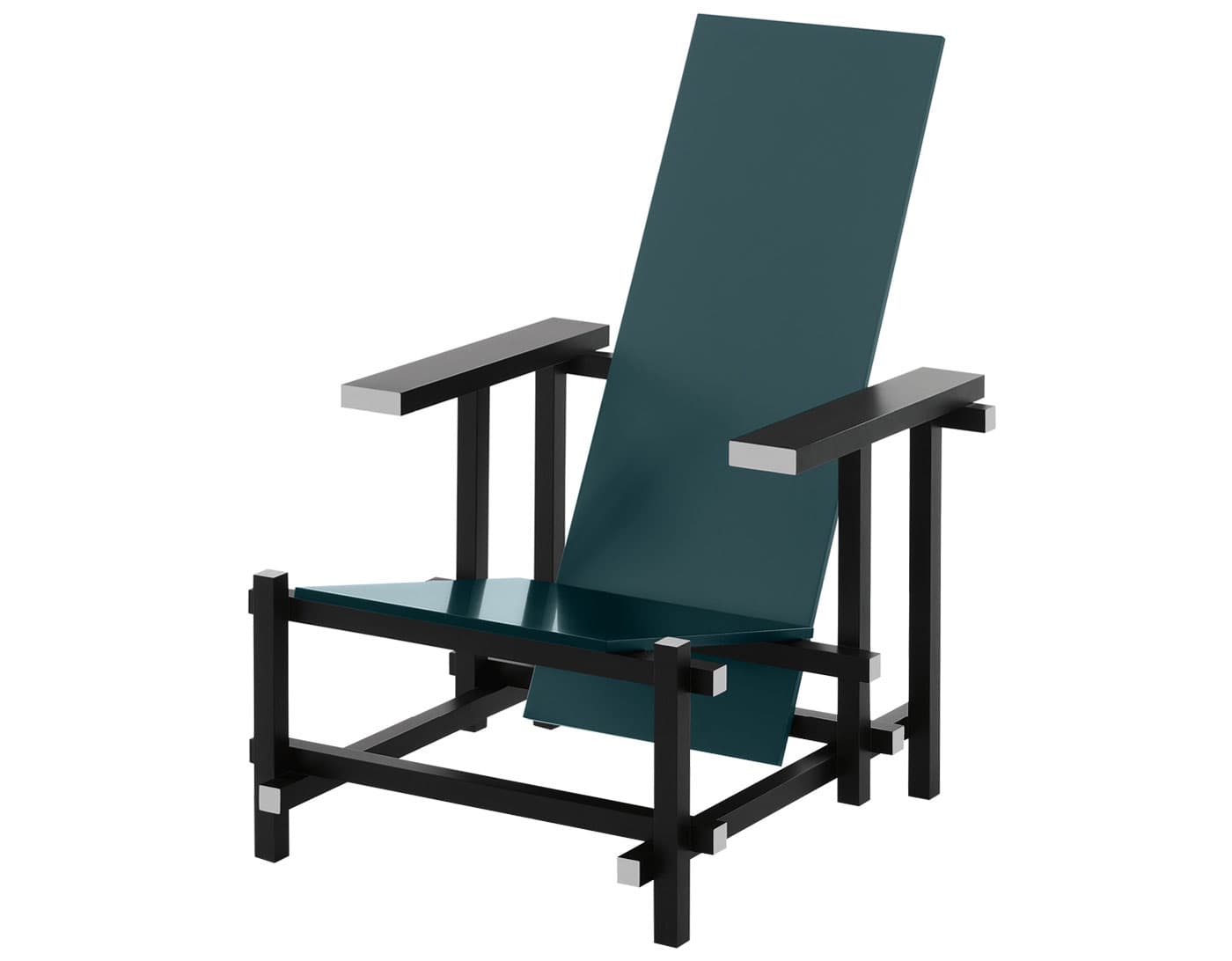
A variation of the iconic 1918 chair by G. T. Rietveld, the Zeilmaker version grew out of the Dutch master's unflagging exploration and the clear evolution of the archetypal model with a view to the exploration of color. The structure is in black-stained beechwood with white contrasting parts. Seat and back in green lacquered multi-plywood.
While researching the origins of the Red and Blue model in collaboration with the Rietveld heirs, it emerged that the key idea of the first prototypes was based on the concept of spatial organization expressed through the monochrome tones of its elements. The first version was in fact produced in 1918 in completely unpainted wood. In the following years Rietveld proposed various examples, either monochrome or painted in different colors, depending on the requirements of his customers and the interiors for which the chairs were intended.
As such, it comes as no surprise to find this 1920s version, presented as part of Cassina's MutAzioni selection, created for the school teacher Wicher Zeilmaker with a black frame with white ends and a dark green painted seat and backrest. It was Rietveld's ever-increasing involvement in the De Stijl movement that led him to also use primary colors on this model in 1923, and as such the chair became a veritable manifesto for the emerging neoplastic movement.
Red and Blue Chair
By Gerrit Rietveld, From Cassina- Design + Manufacturing
- Design Gerrit T. Rietveld, 1918
- Made in Italy by Cassina
- Dimensions
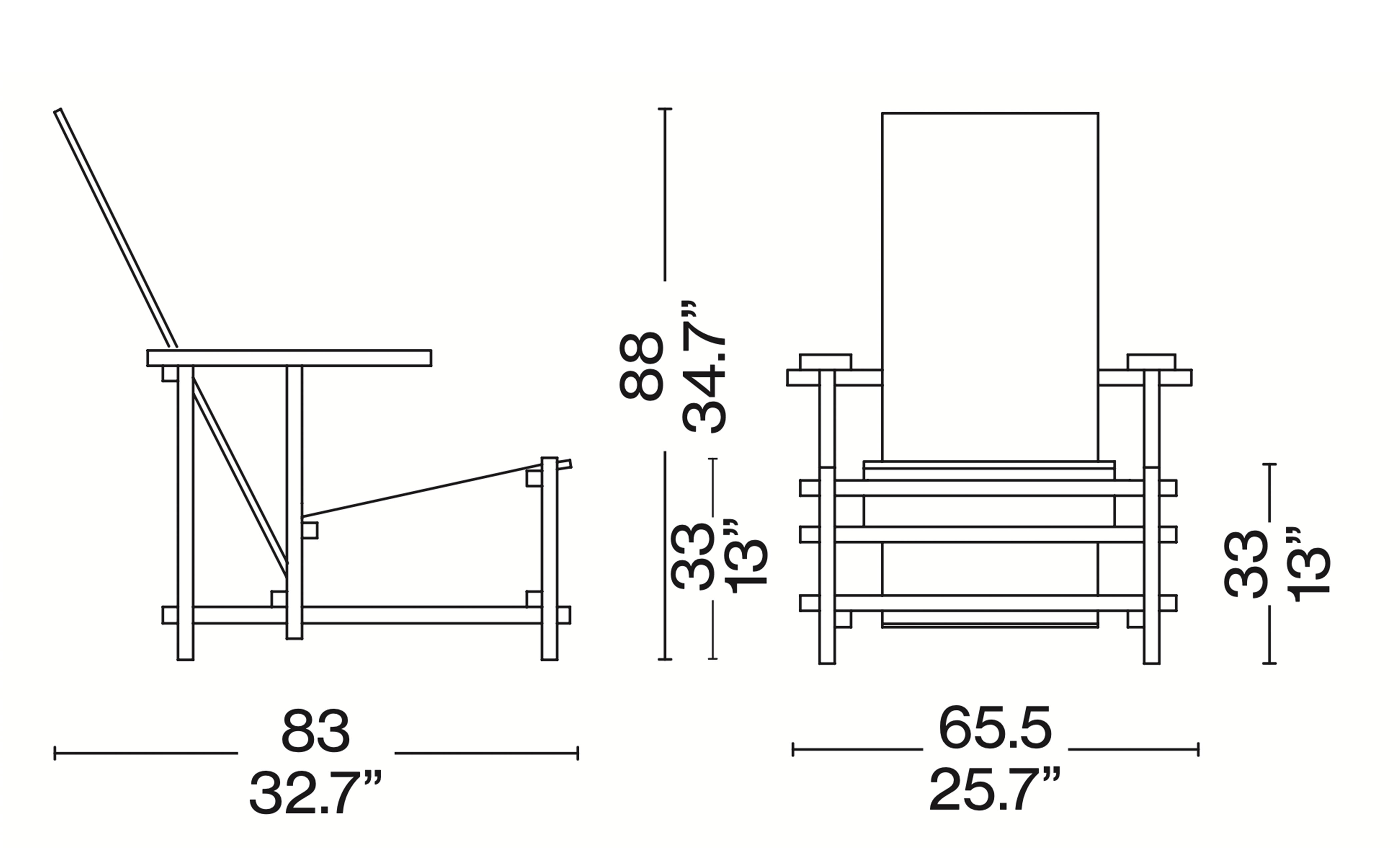
- 25.7" w | 32.7" d | 34.7" h | seat: 13" h
- Materials
- Stained beech frame, plywood seat & back
- Shipping Time
- Select options for shipping time
- historically significant
- museum piece
- archival reissue
- De Stijl
Red and Blue Chair Options (2)
Pre-configured variants of this product
Similar Products
You may also like these products
For more than two decades, hive has been a trusted partner to architects and interior designers who refuse to compromise on quality. We offer expert consultation, project quotes, and dedicated support by phone and email — alongside online trade pricing for immediate access to your member benefits.
Join the Trade Professionals Program