



"I am constantly concerned with this extraordinary idea of the awakening of the consciousness."
- Gerrit Rietveld
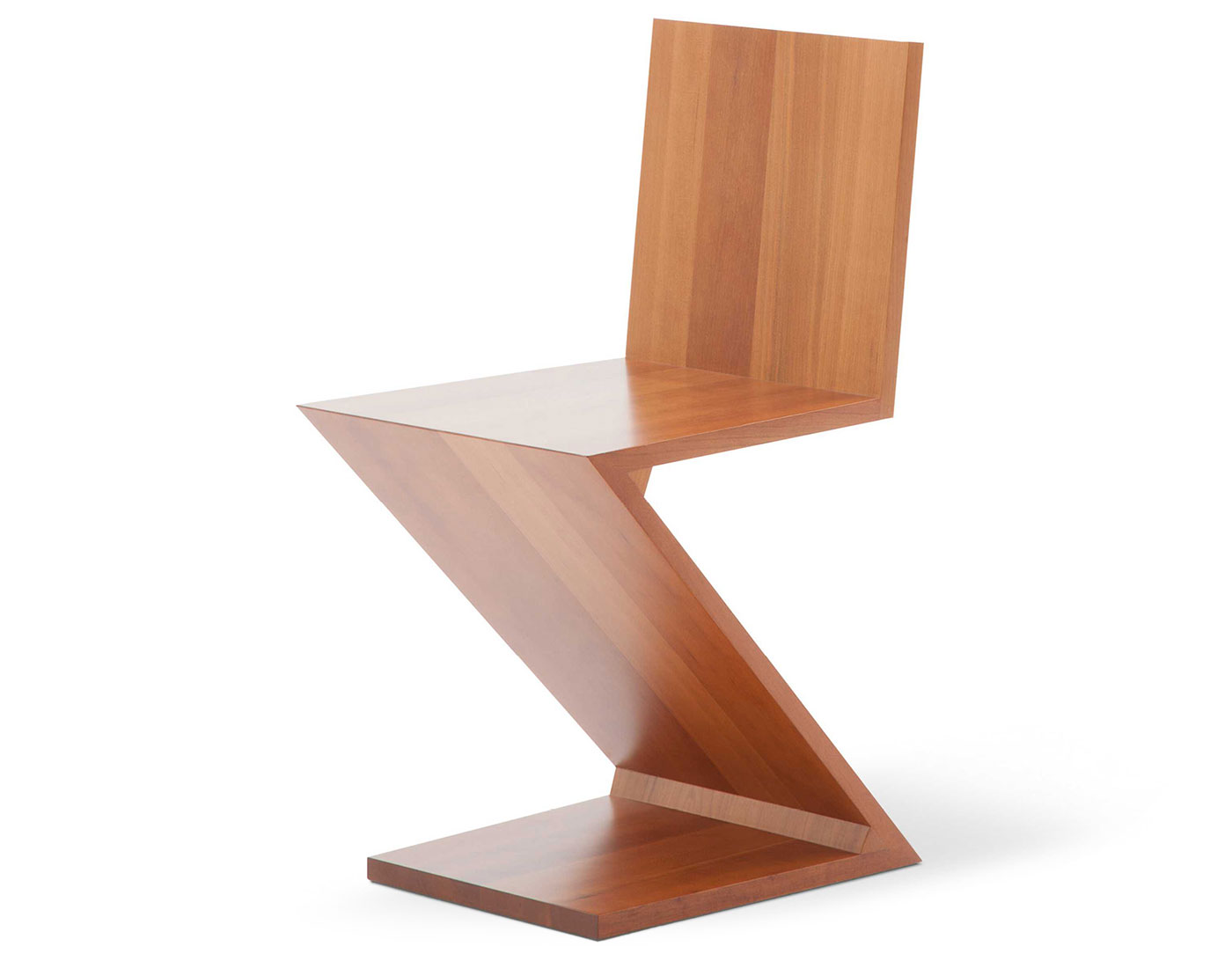
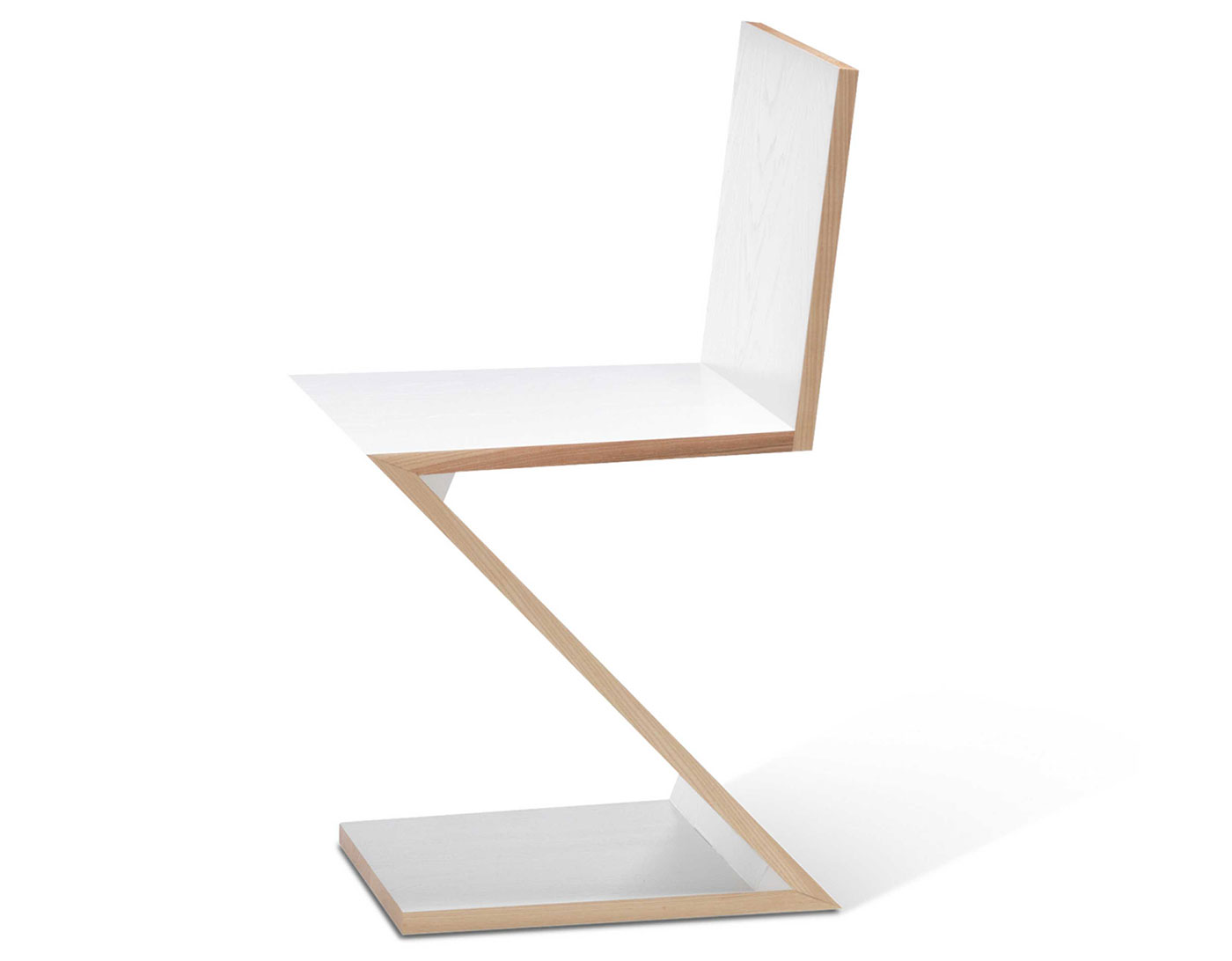
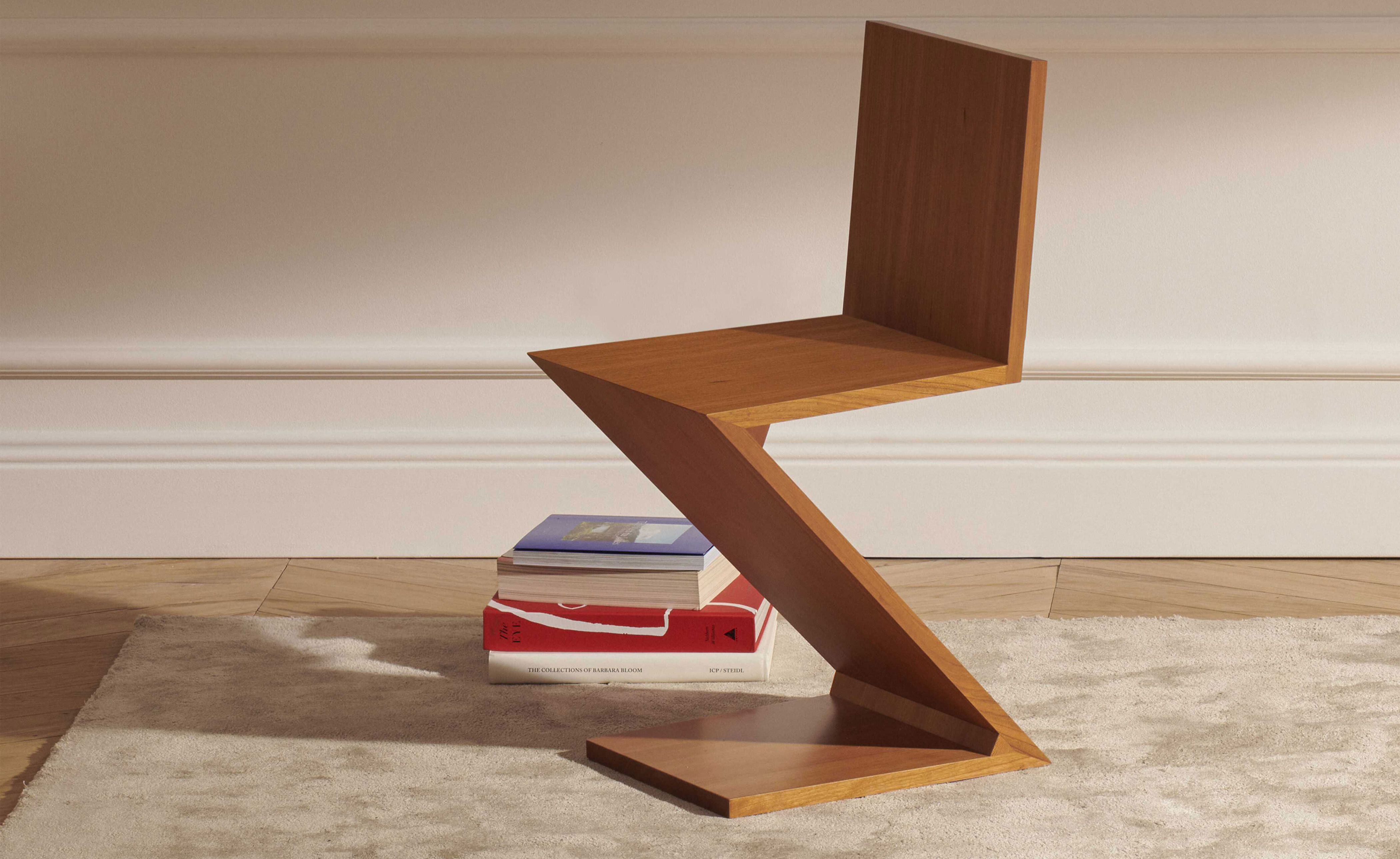
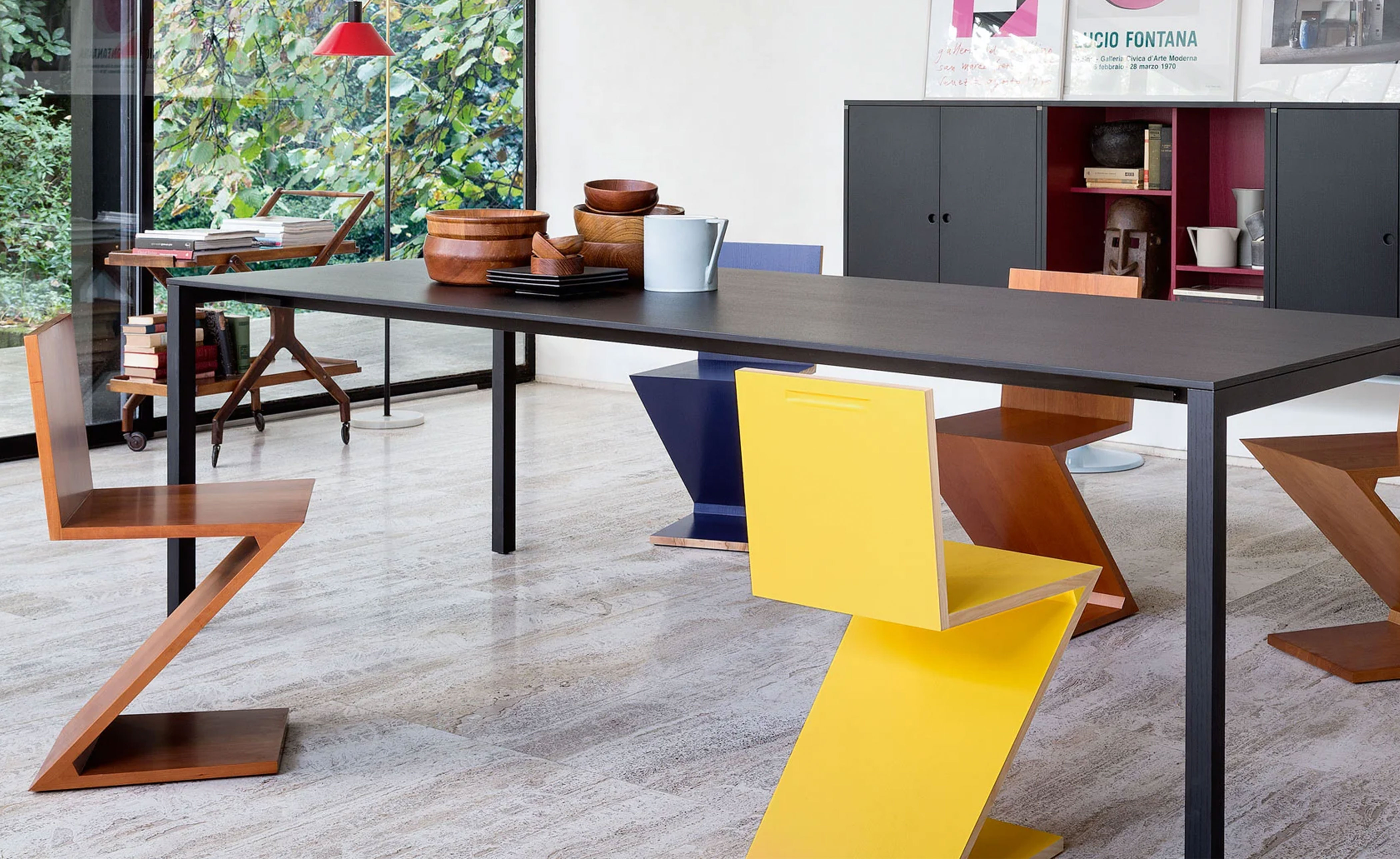
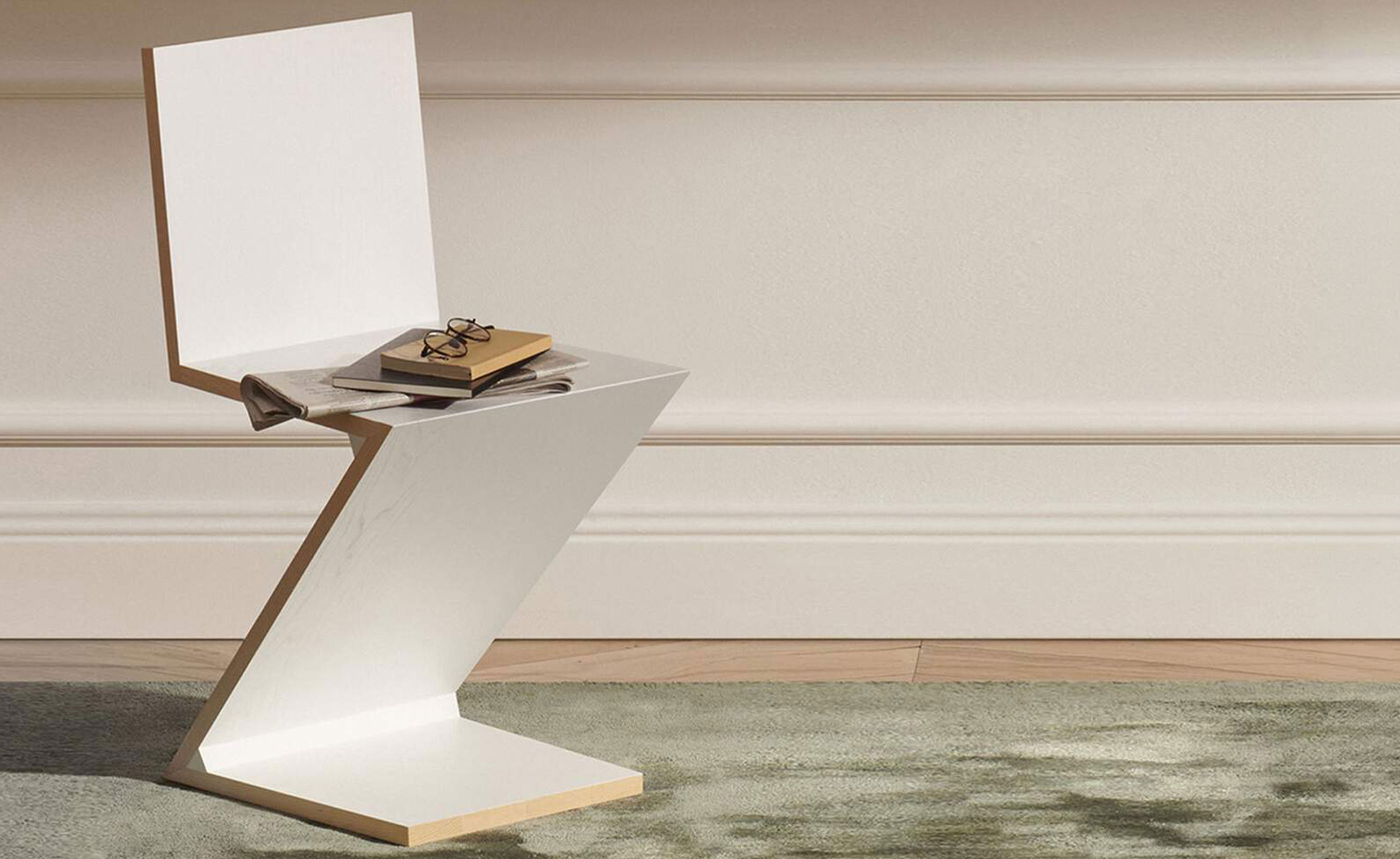
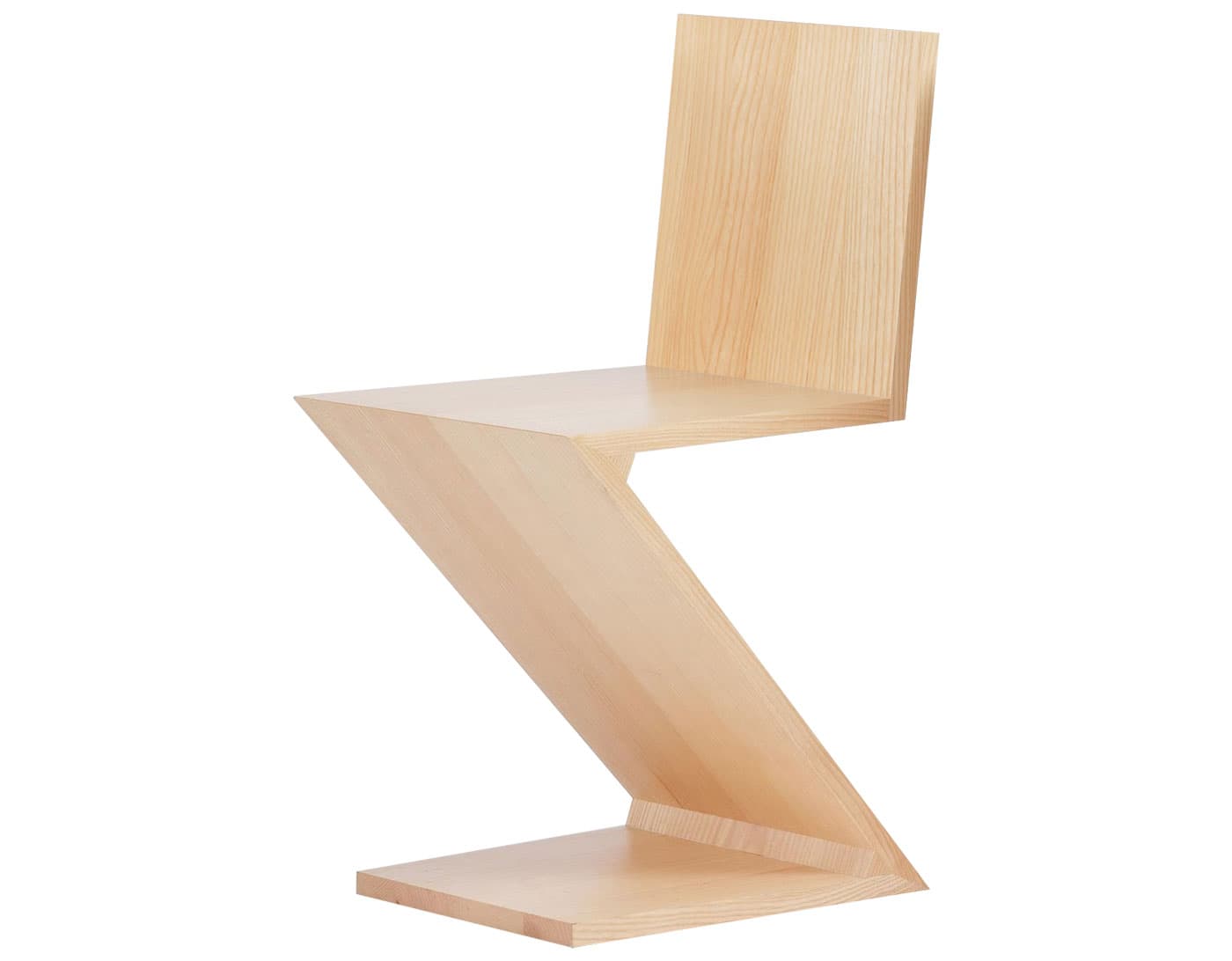
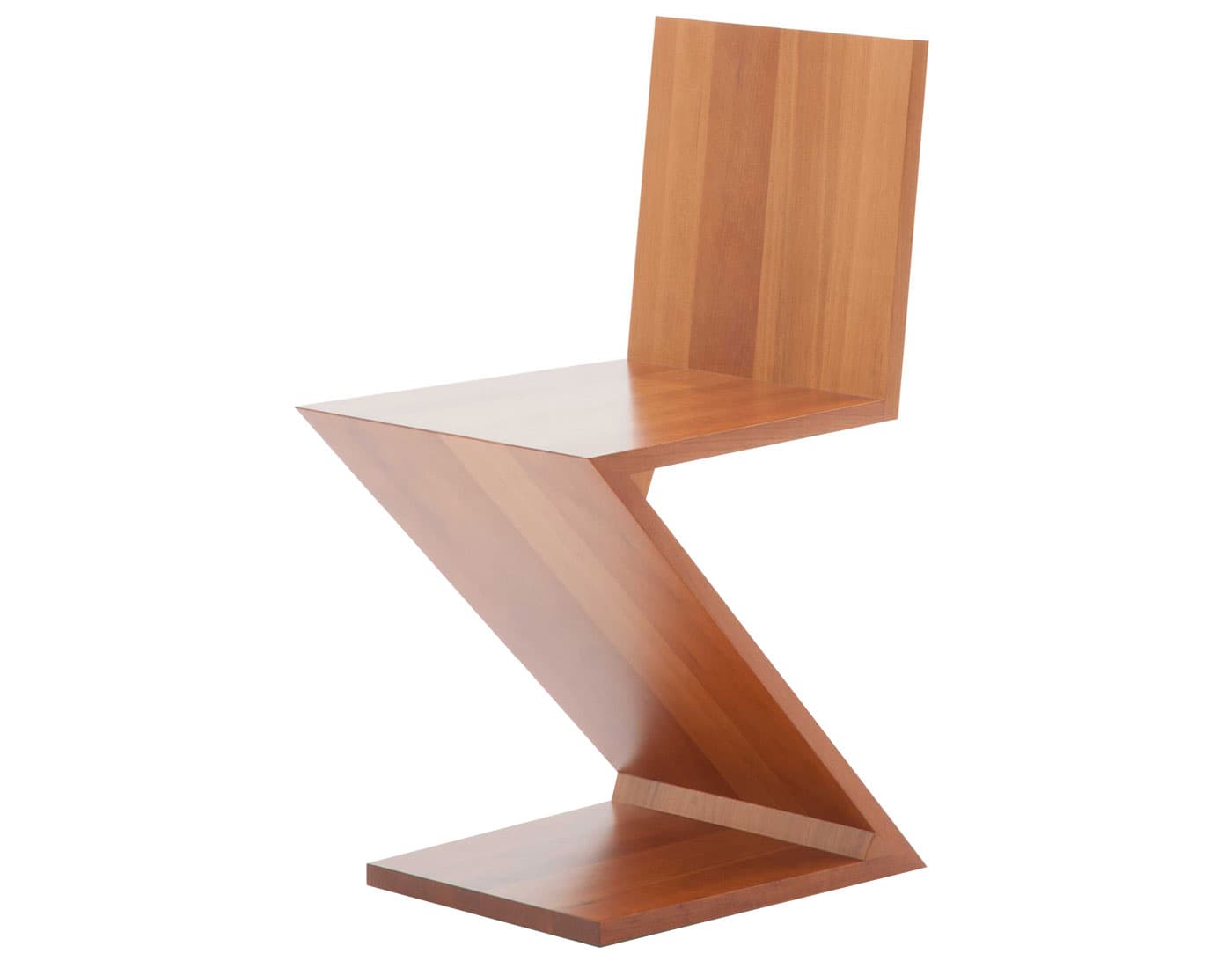
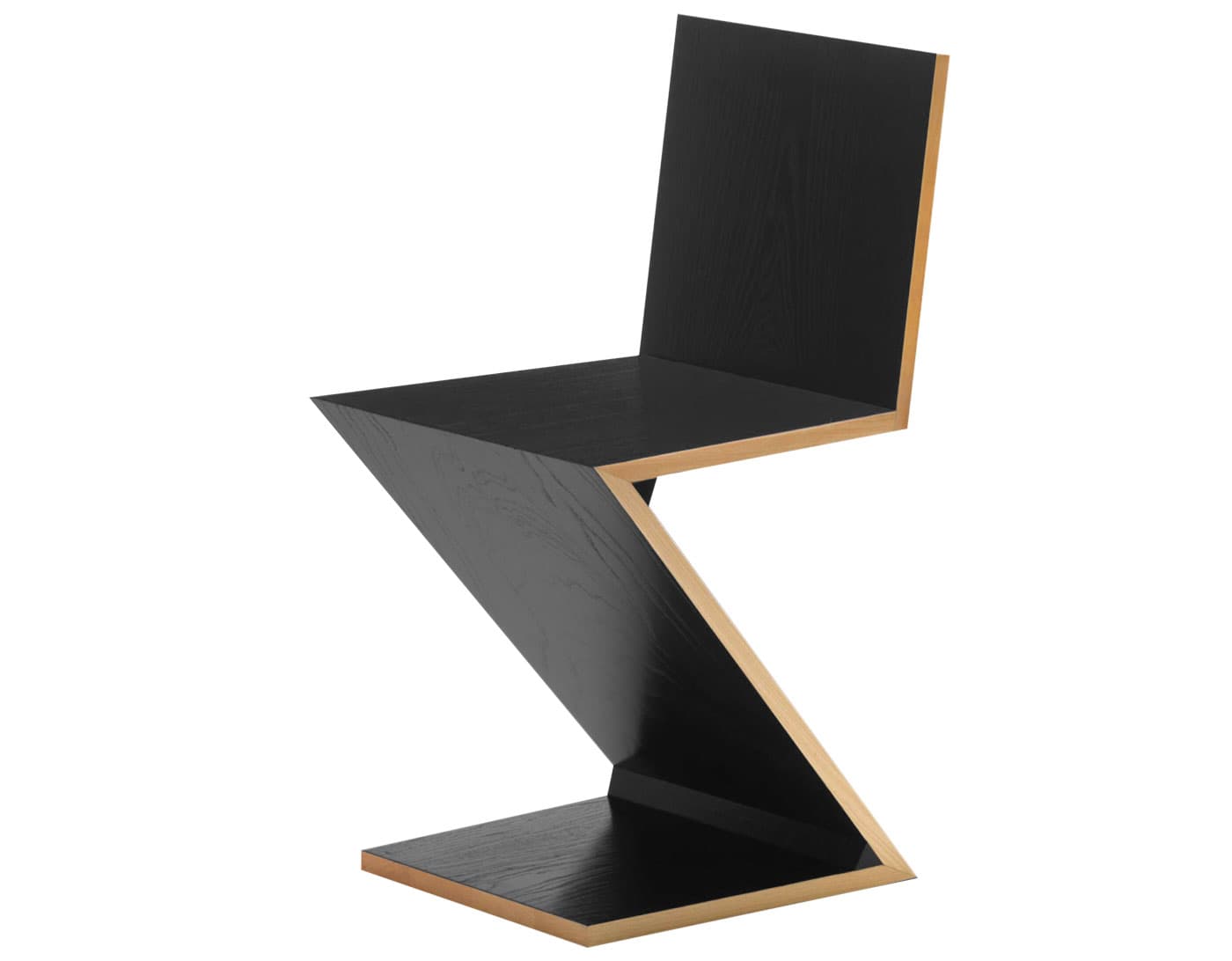
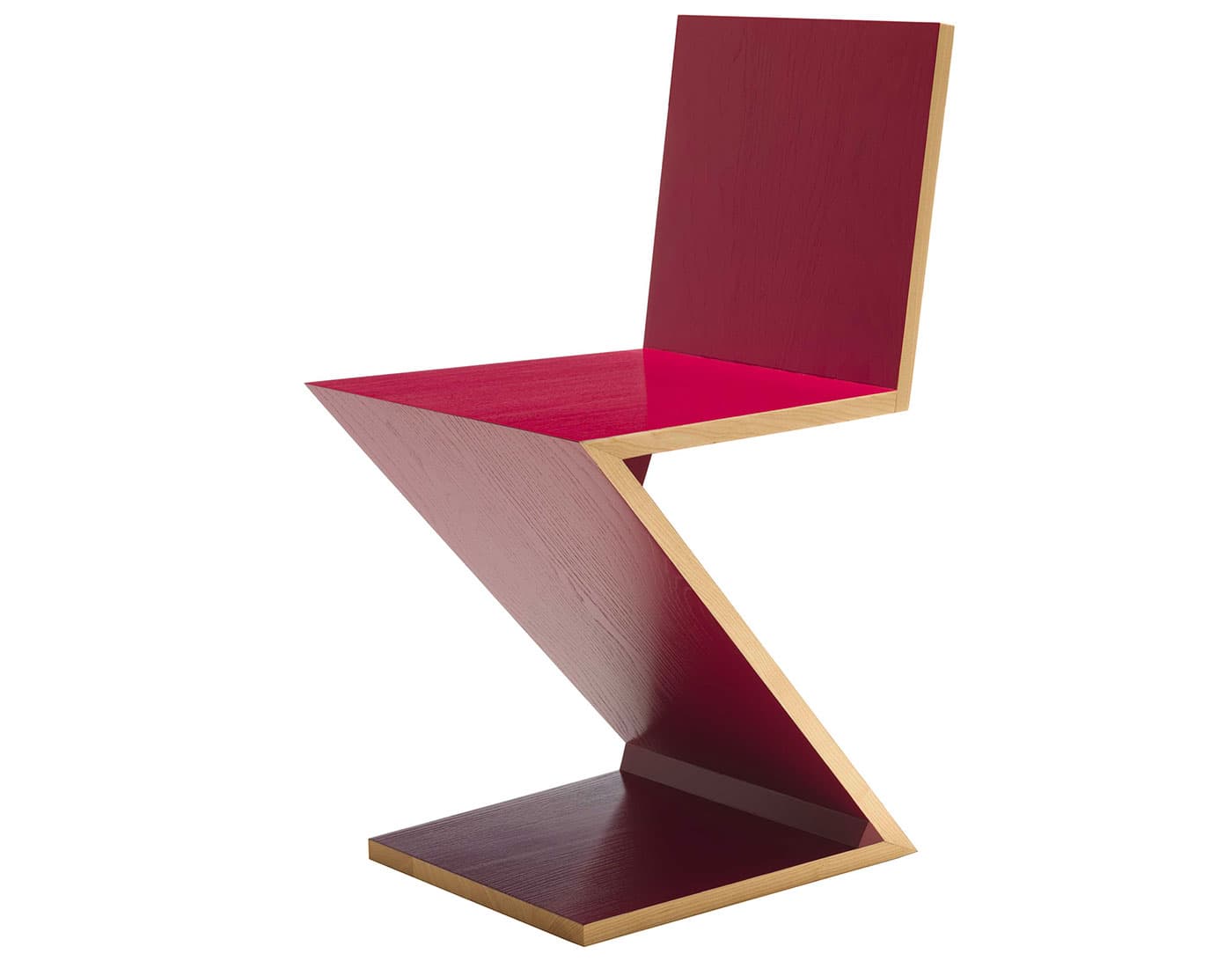
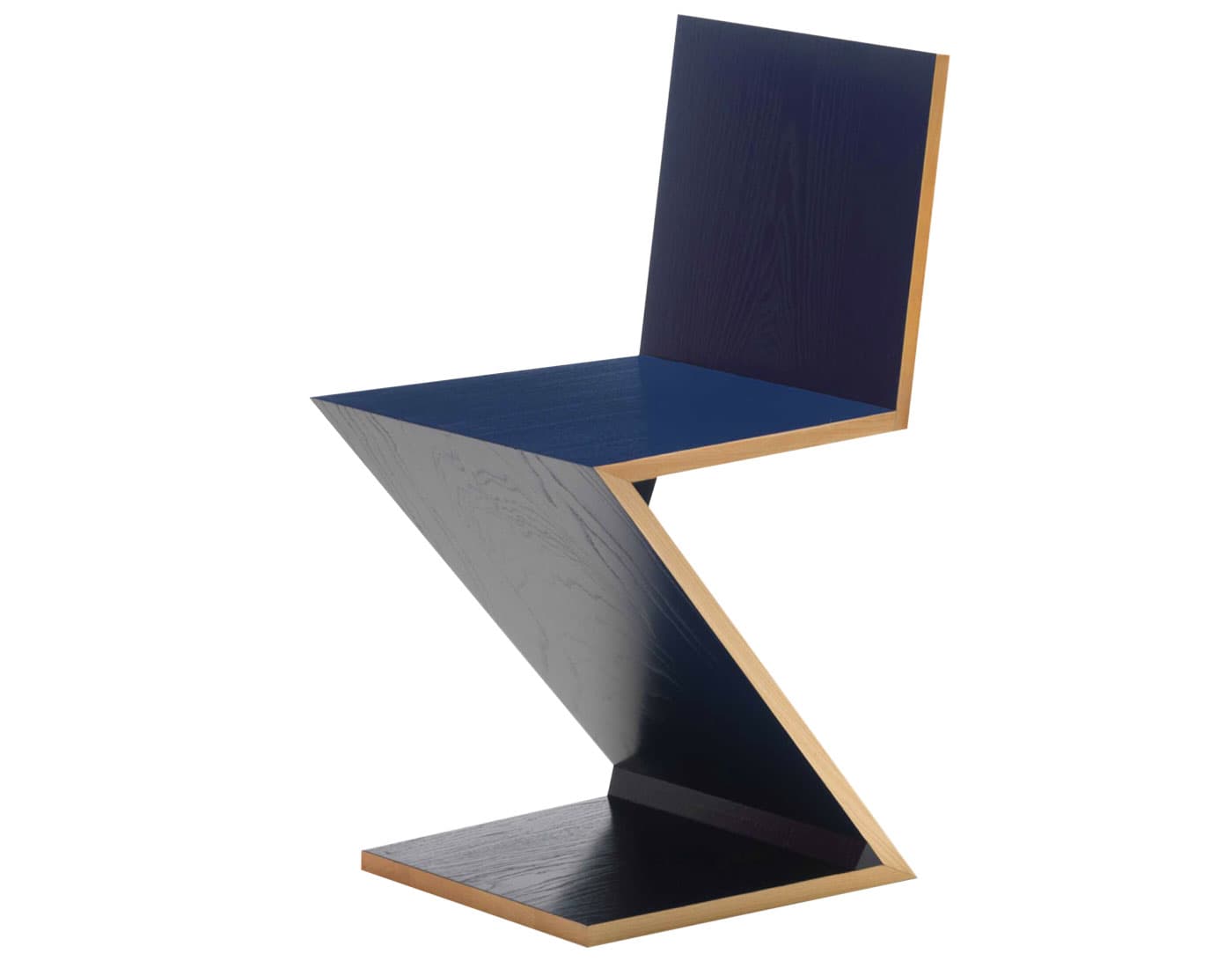
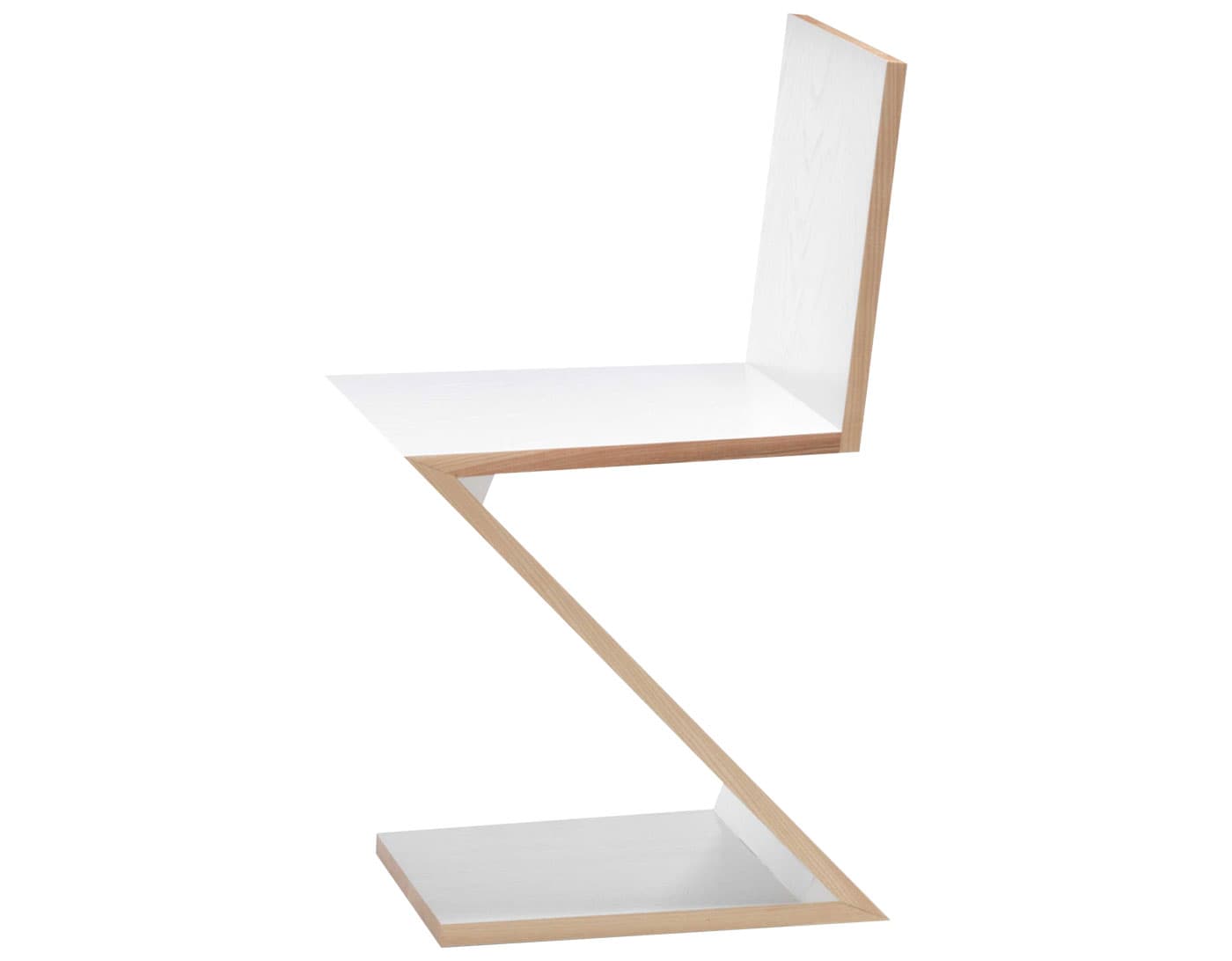
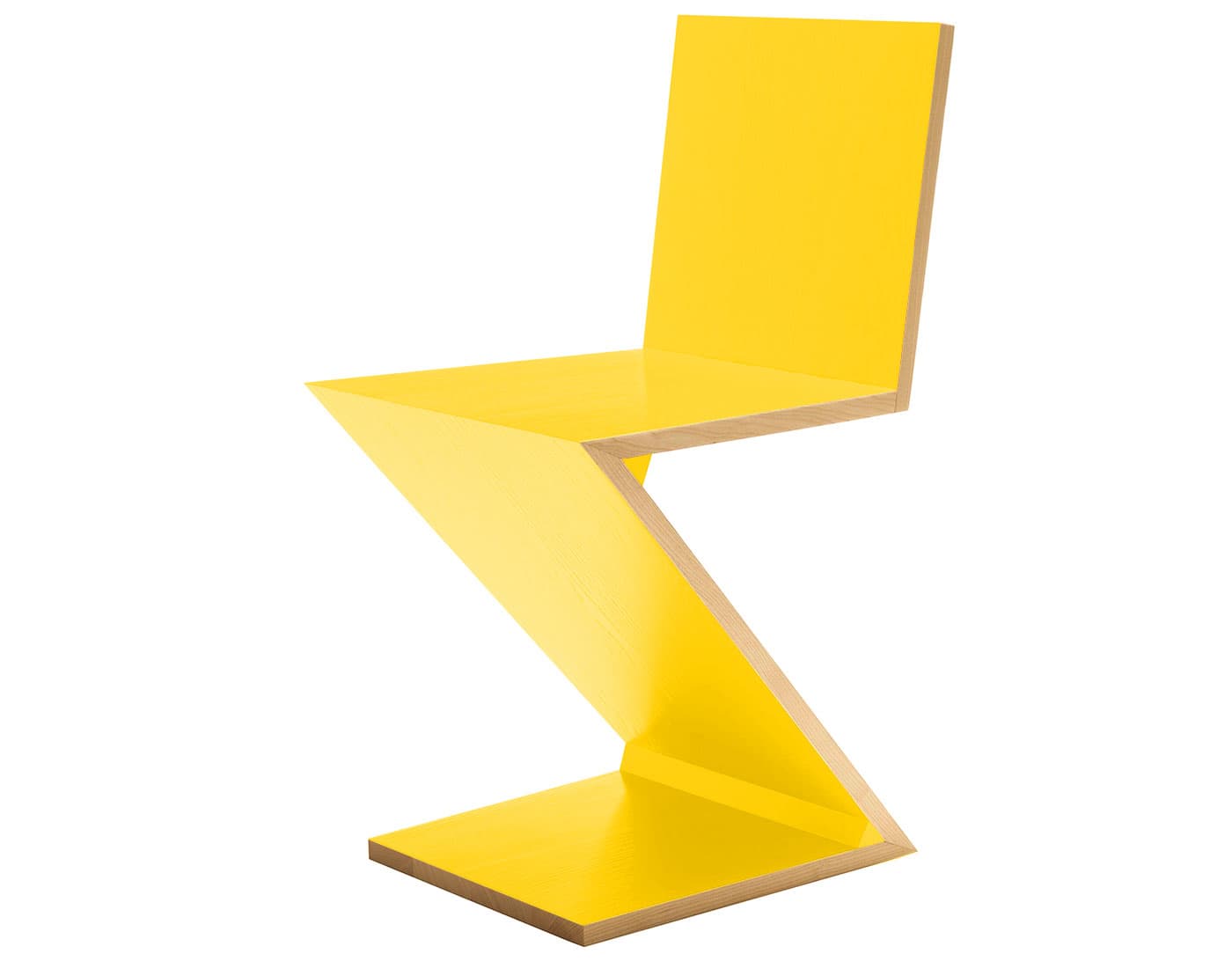
Designed by Gerrit Rietveld, this chair provided an early example of a cantilevered seat, and is composed of four wood boards articulated end-to-end to form an extremely eye-catching example of an unstable structure.
Originally designed in the midst of the De Stijl movement in 1934, the Zig Zag Chair is one of Gerrit Rietveld's most celebrated works and defining artifacts of that era. De Stijl was a Dutch avant-garde movement founded in 1917 that championed pure abstraction, reducing art and design to its most elemental components: straight lines, right angles, and primary colors. Rietveld was a central figure in De Stijl alongside painters like Piet Mondrian, and his furniture designs were as much artistic manifestos as functional objects.
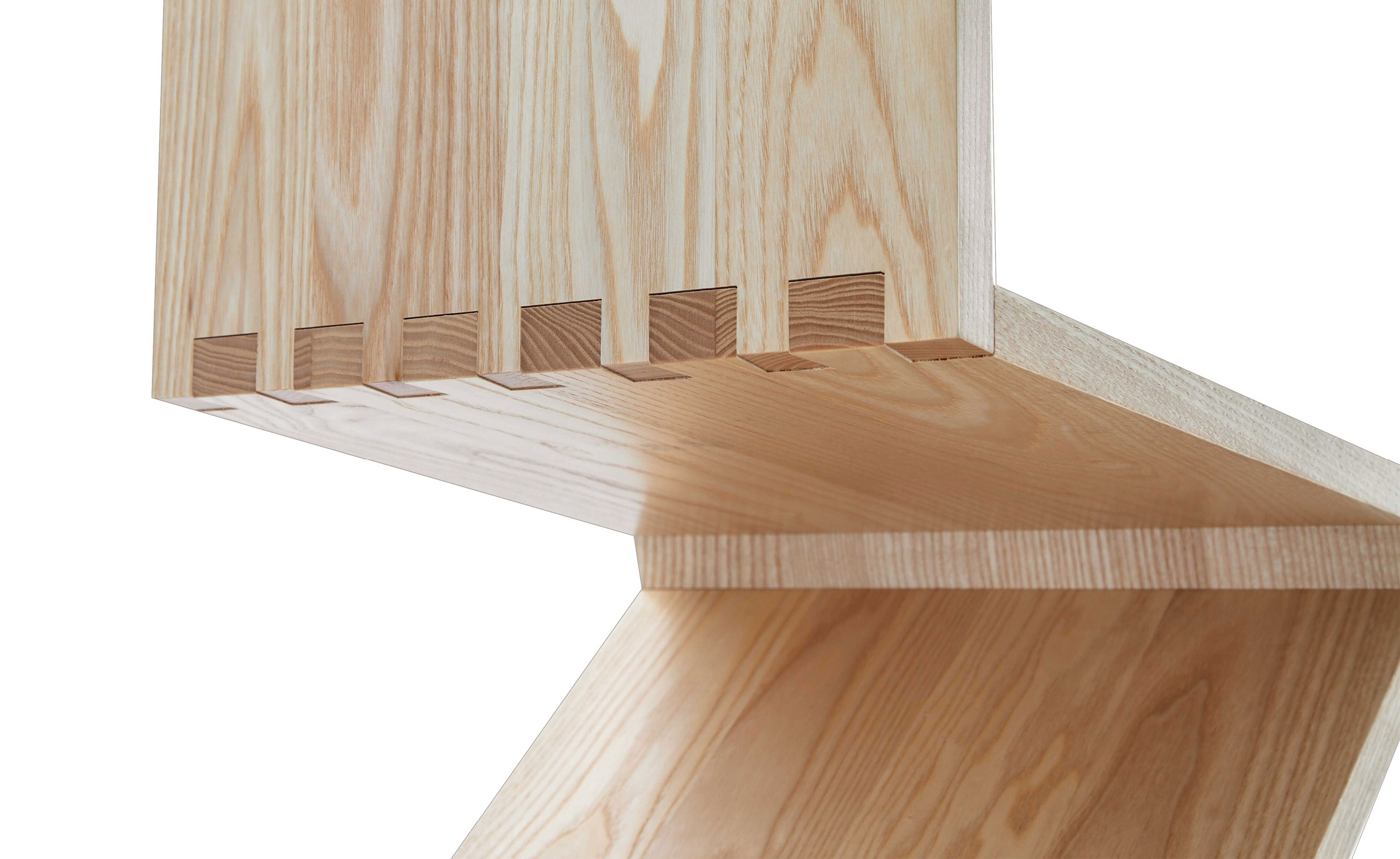
The Zig Zag Chair was a radical departure from conventional furniture construction. By eliminating the traditional four-legged structure entirely and replacing it with a continuous Z-shaped plane, Rietveld challenged the very definition of what a chair could be. The design also posed a significant engineering problem, how to keep a cantilevered seat structurally sound using only wood, which was solved through the precision dovetail joinery that remains a hallmark of the piece today.
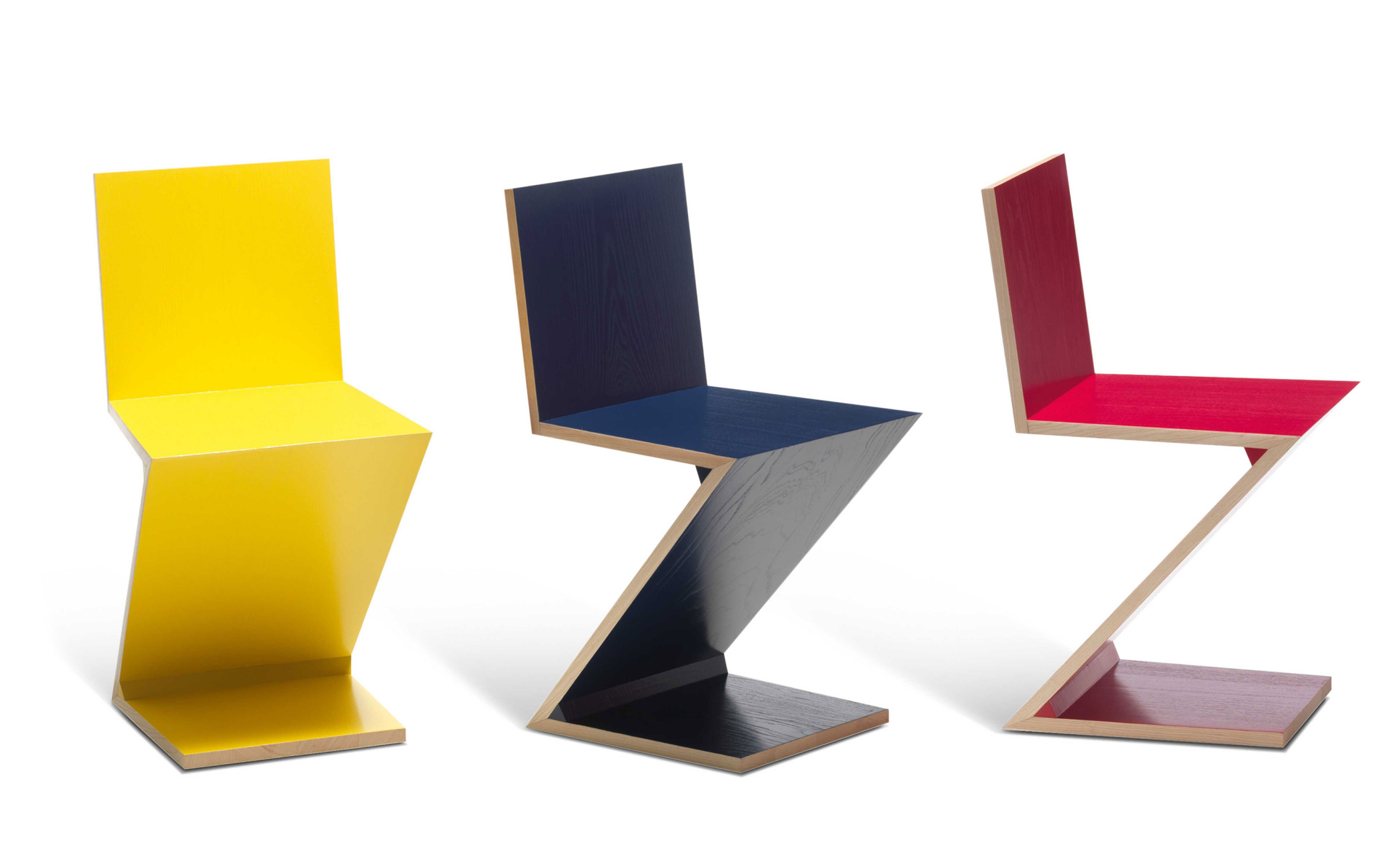
The chair entered the Cassina I Maestri collection in 1973, produced under license with the Rietveld family, ensuring its continued craftsmanship remains faithful to the original vision. The aesthetic uniqueness of this piece can be seen particularly well in the colored version, its open-pore finish highlighting the veins of the wood on the front and sides. This finish reflects a number of variations on the theme made by Rietveld, designed to highlight the relationship between the vertical, oblique and horizontal lines.
Included in the Design Collection of the Museum of Modern Art of New York.
Zig Zag Chair
By Gerrit Rietveld, From Cassina- Design + Manufacturing
- Design Gerrit T. Rietveld, 1934
- Made in Italy by Cassina
- Dimensions
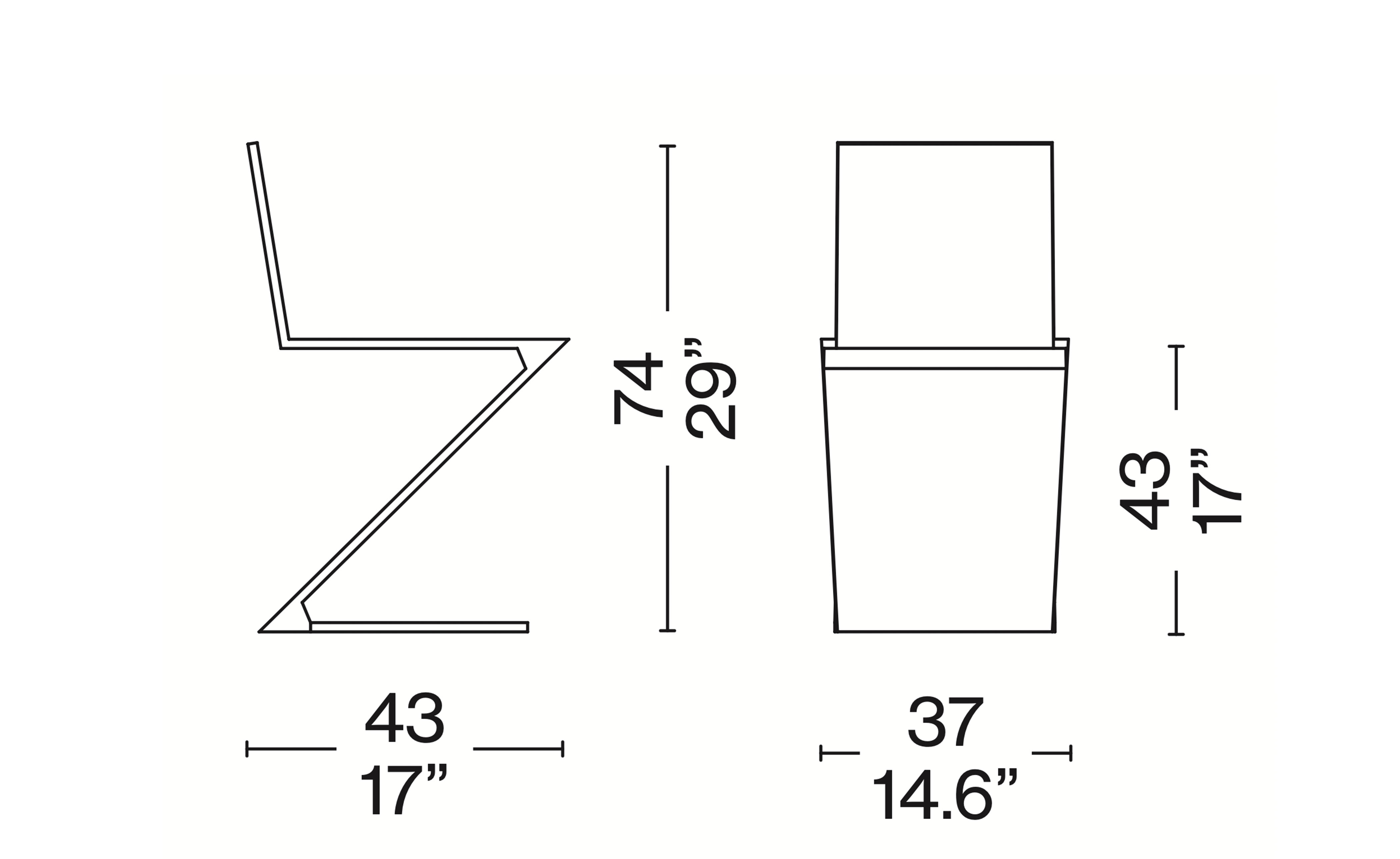
- 14.6" w | 17" d | 29" h | seat: 17" h
- Materials
- Solid cherry or ashwood
- Shipping Time
- Select options for shipping time
- museum piece
- iconic design
- archival reissue
- De Stijl
Zig Zag Chair Options (7)
Pre-configured variants of this product
Similar Products
You may also like these products
For more than two decades, hive has been a trusted partner to architects and interior designers who refuse to compromise on quality. We offer expert consultation, project quotes, and dedicated support by phone and email — alongside online trade pricing for immediate access to your member benefits.
Join the Trade Professionals Program