
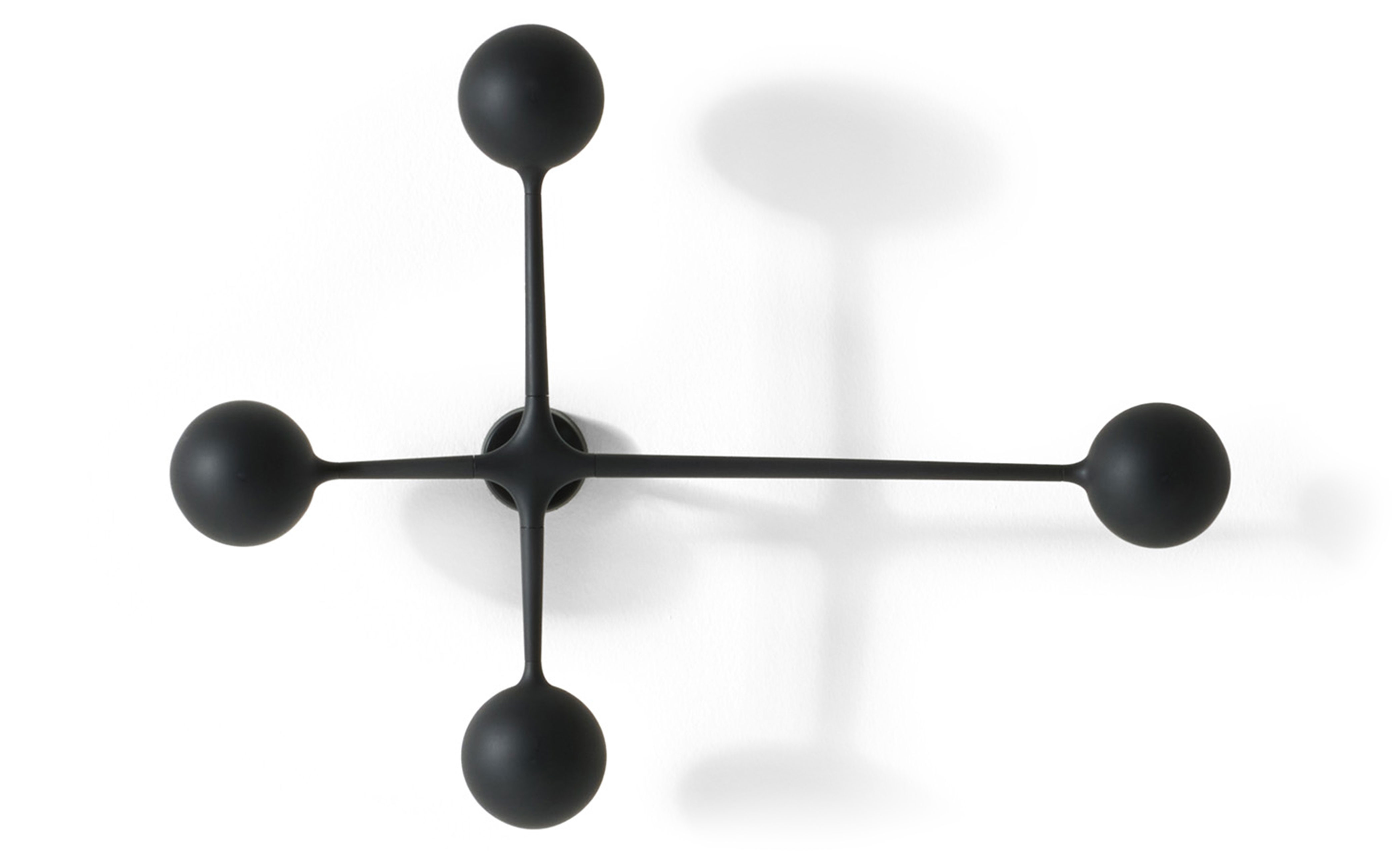
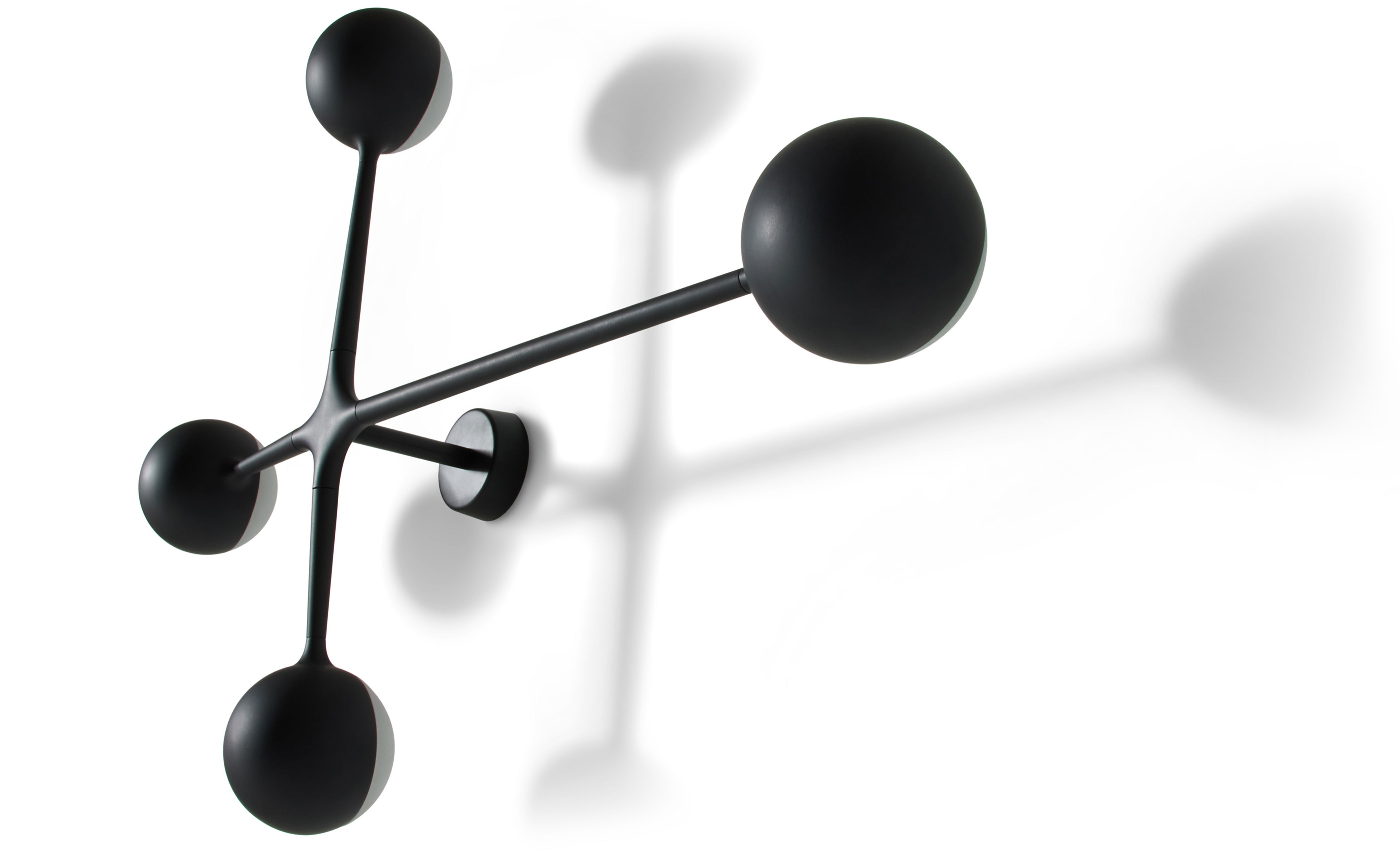
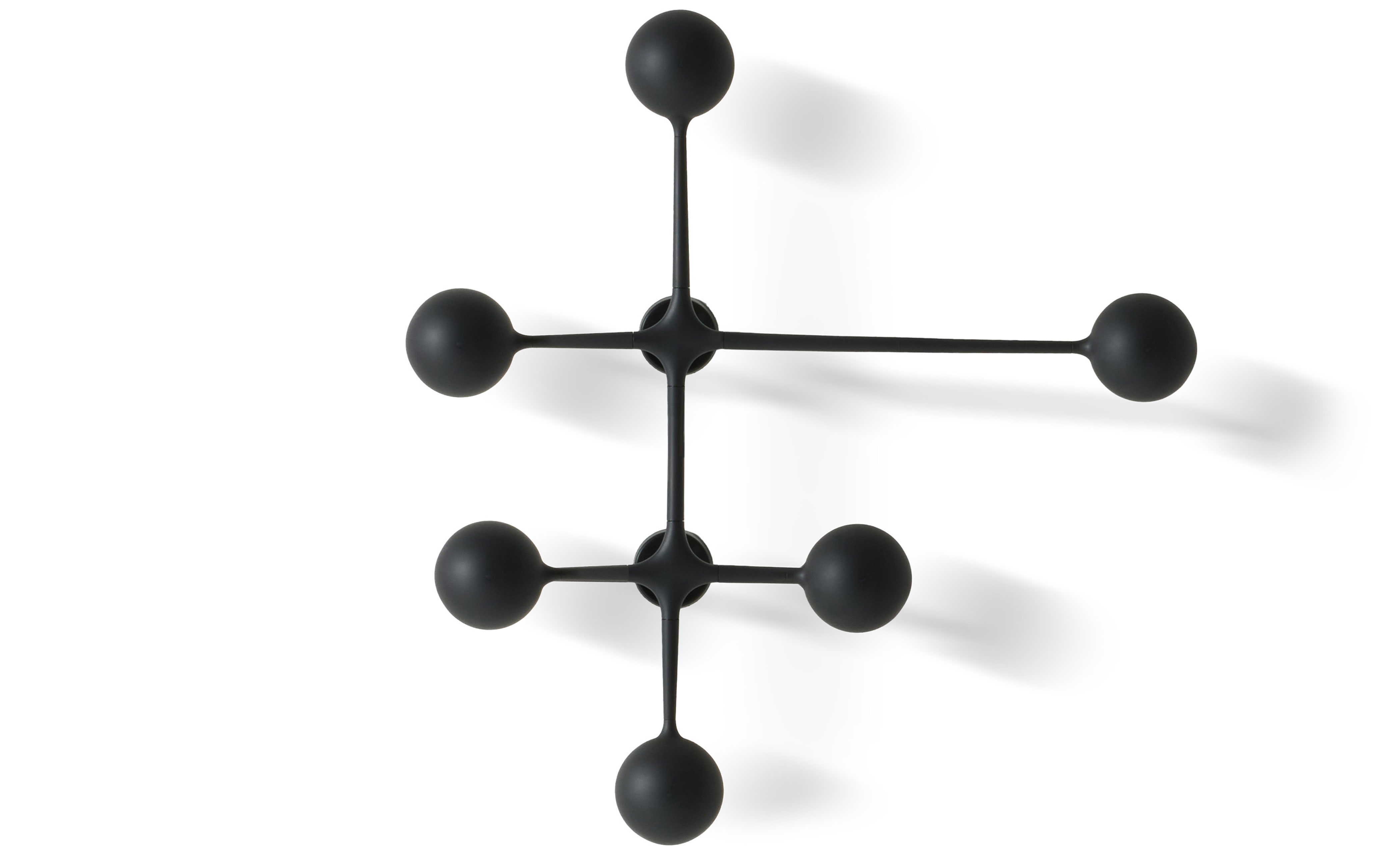
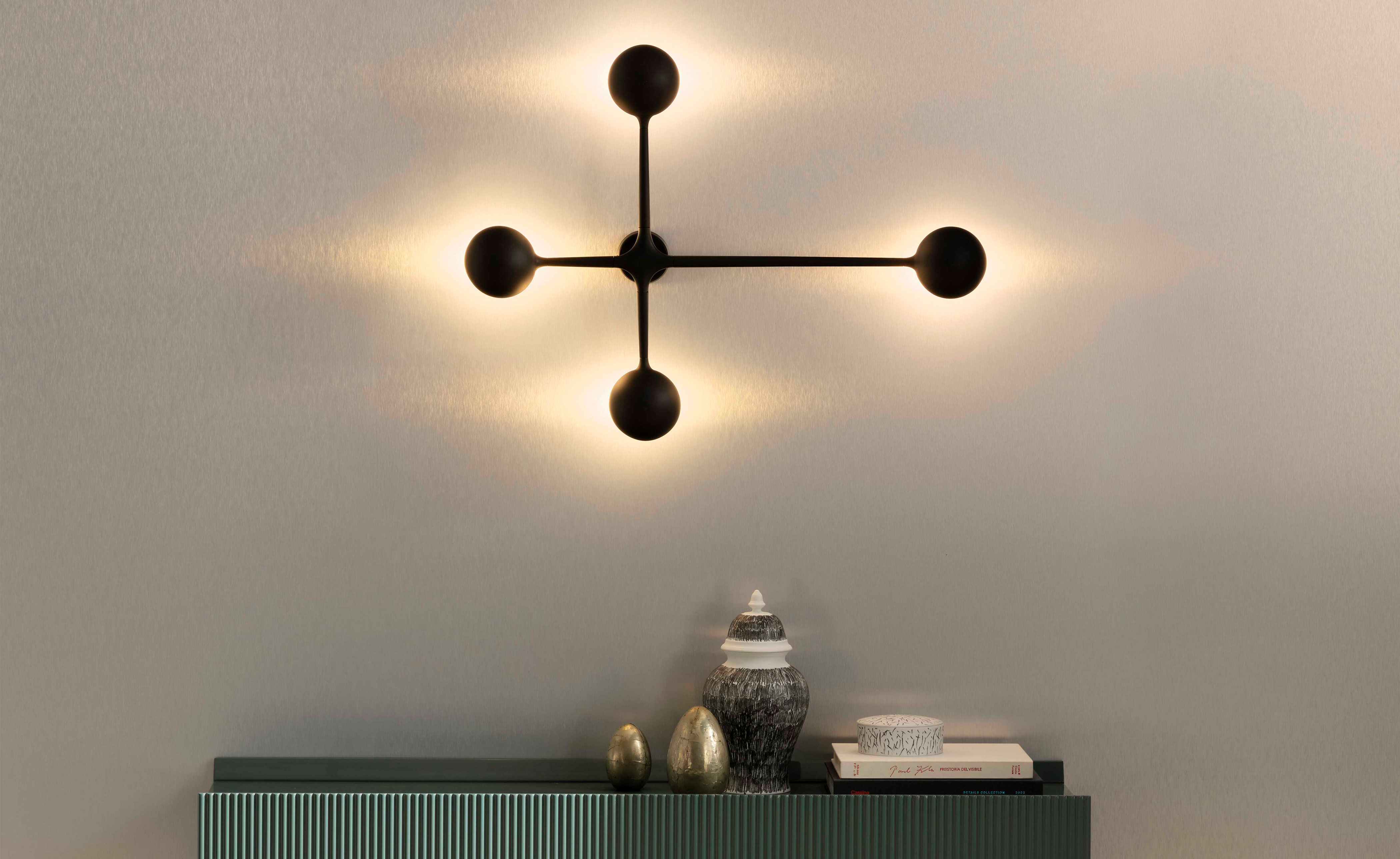
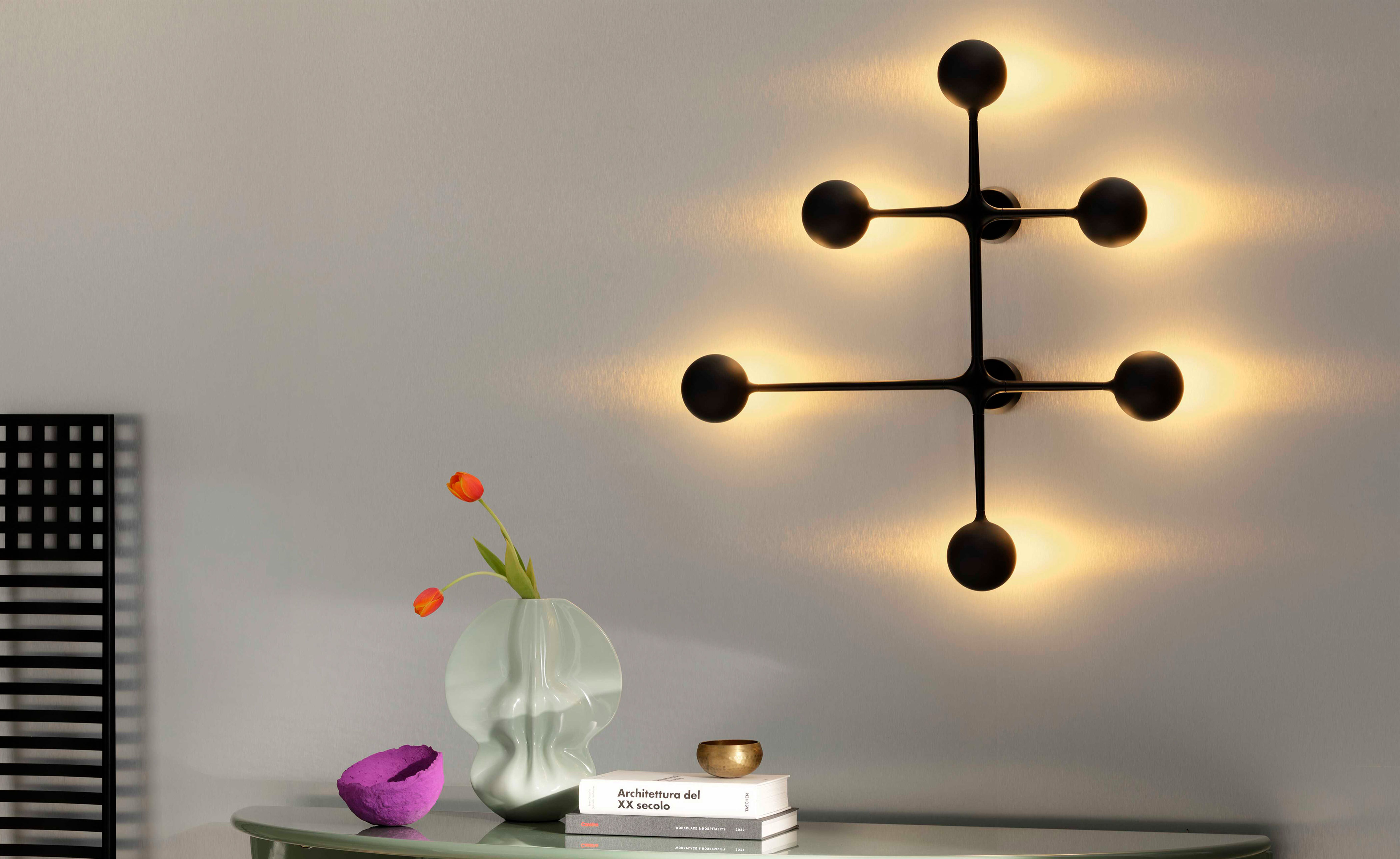
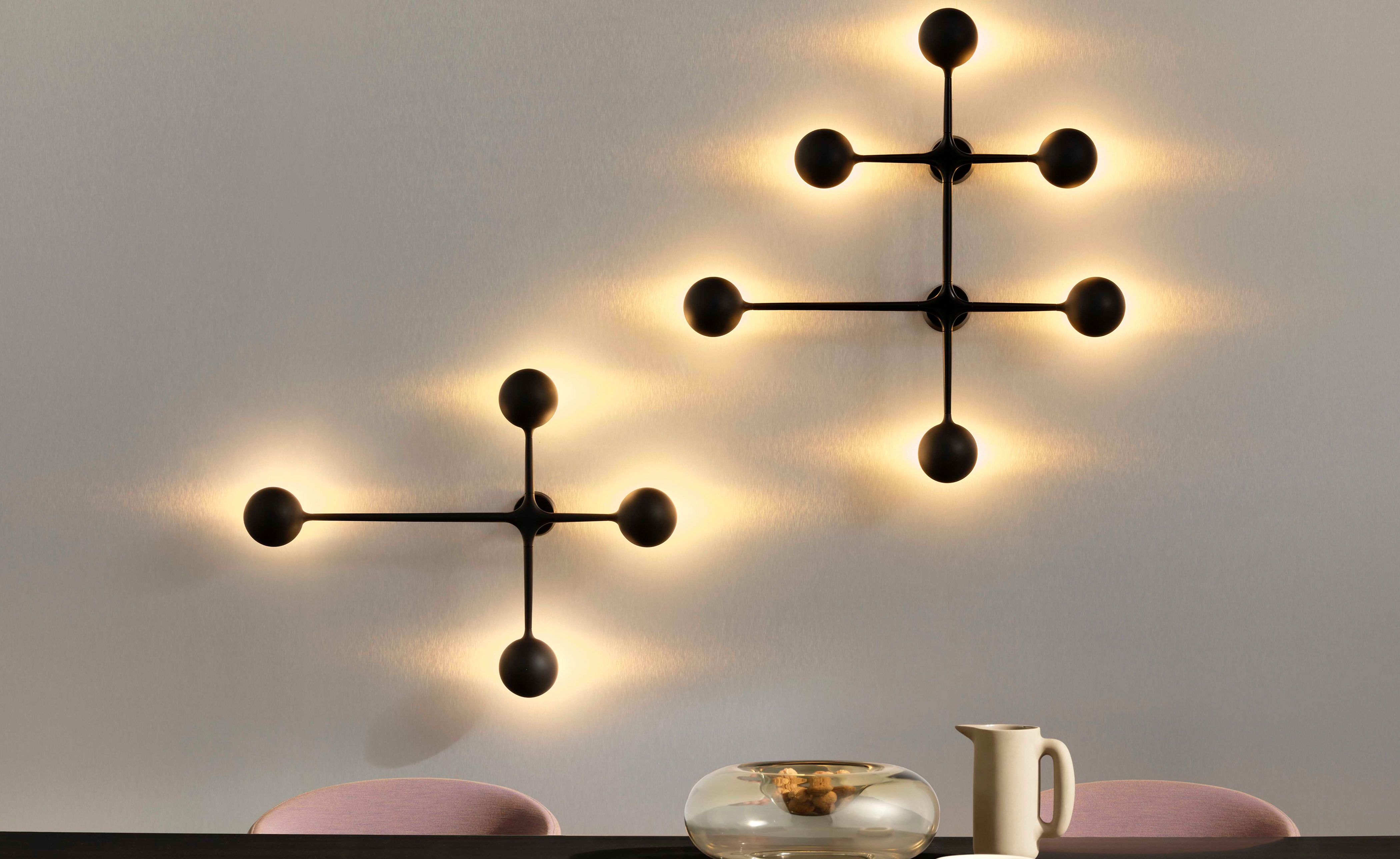
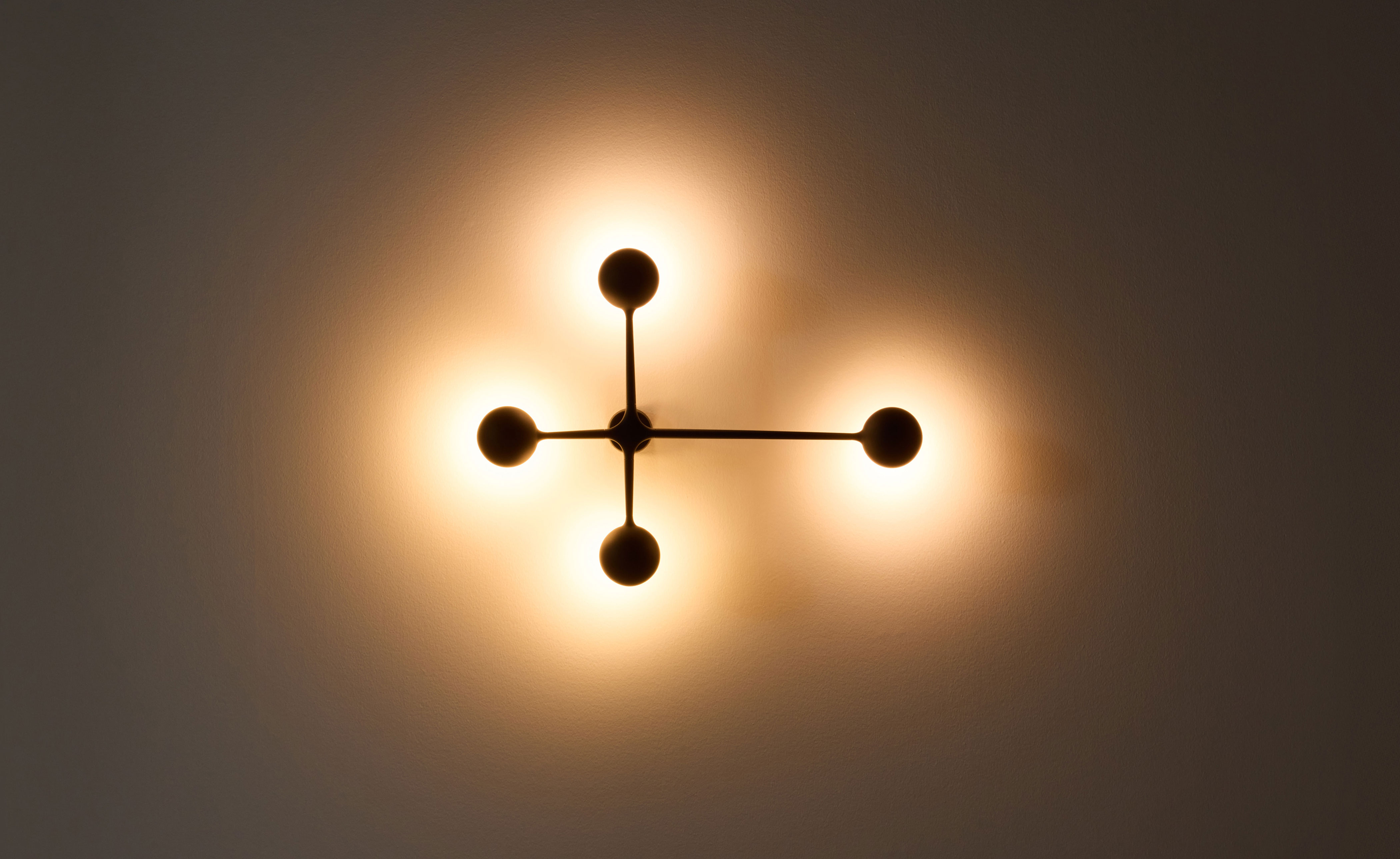
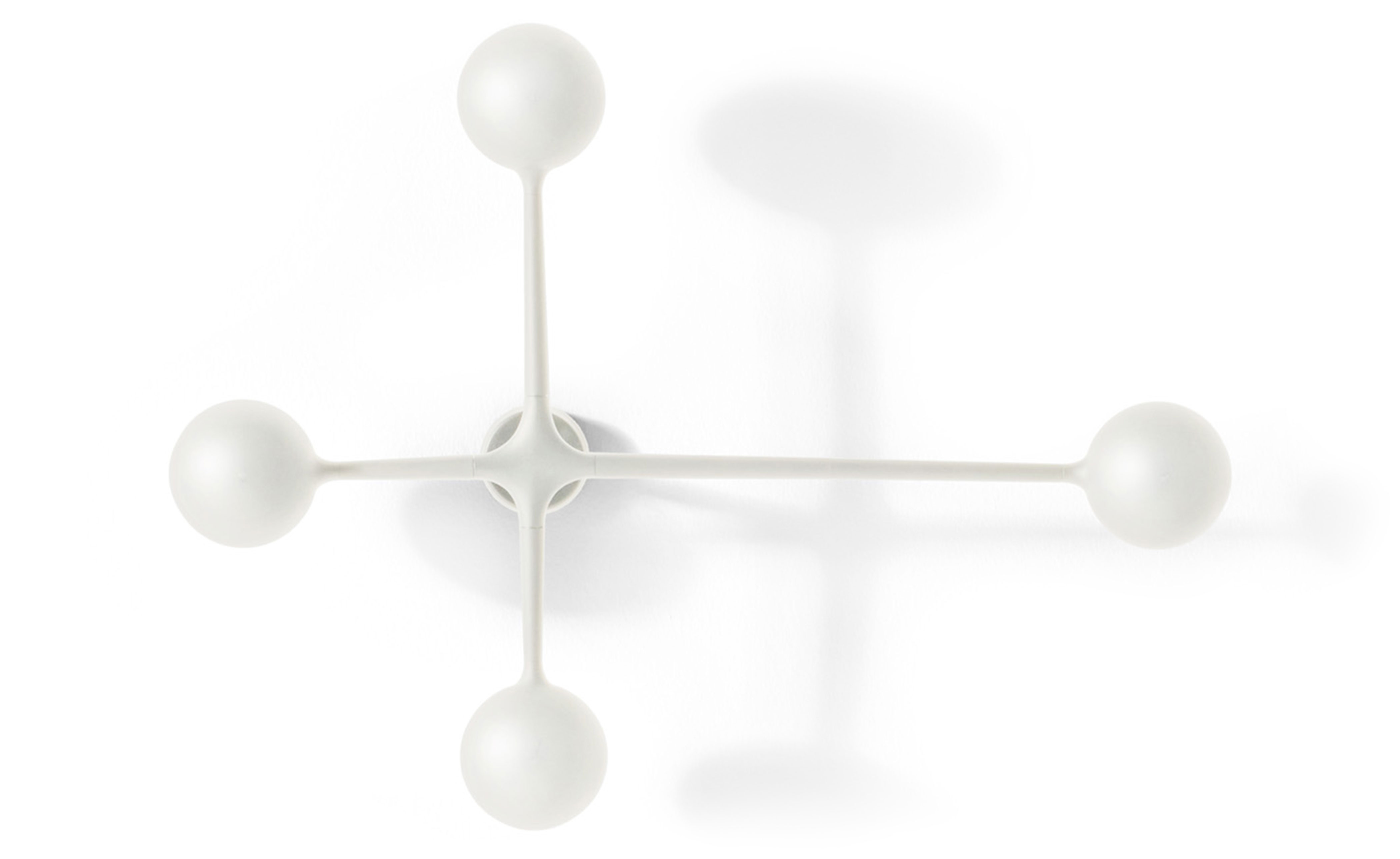
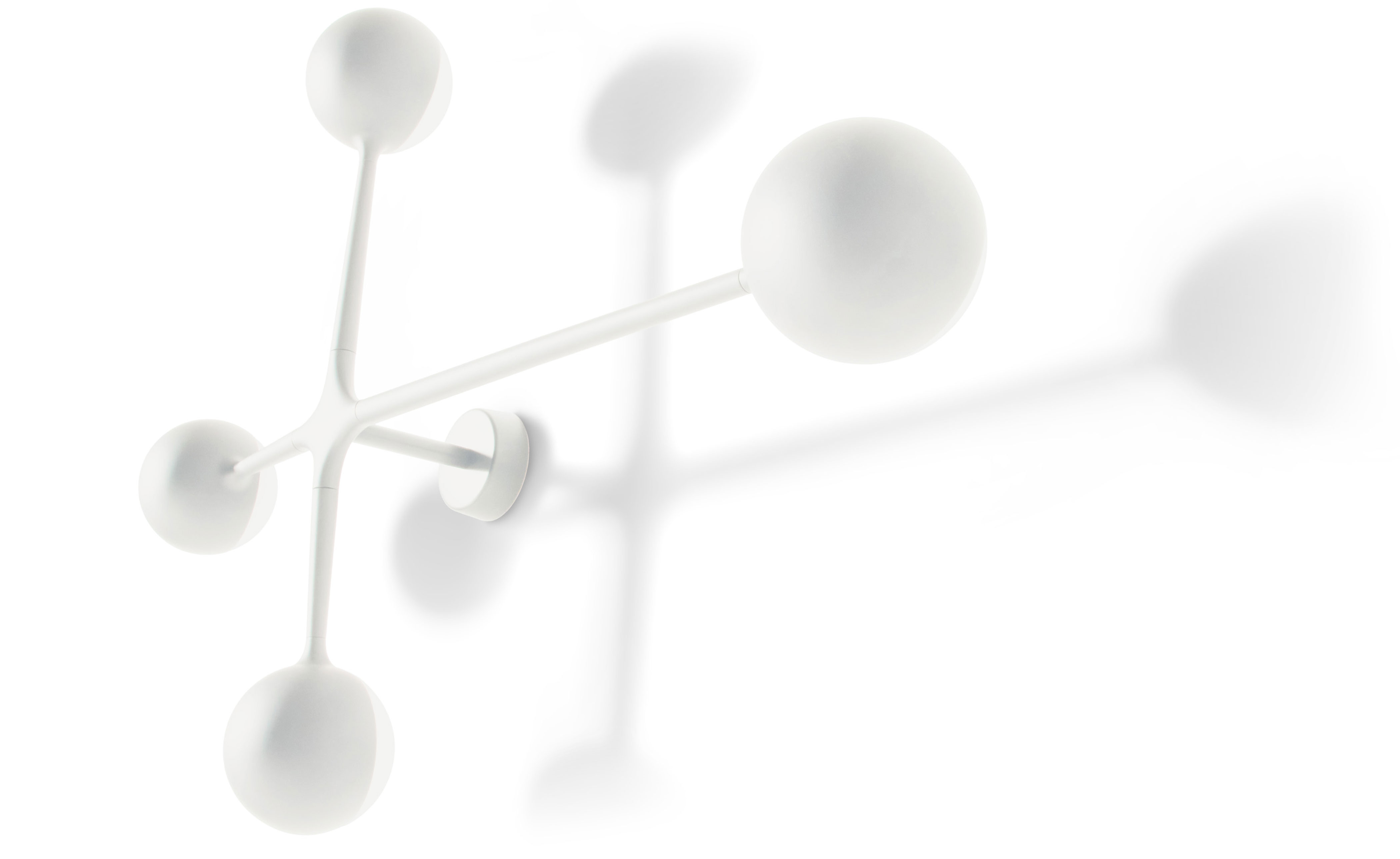
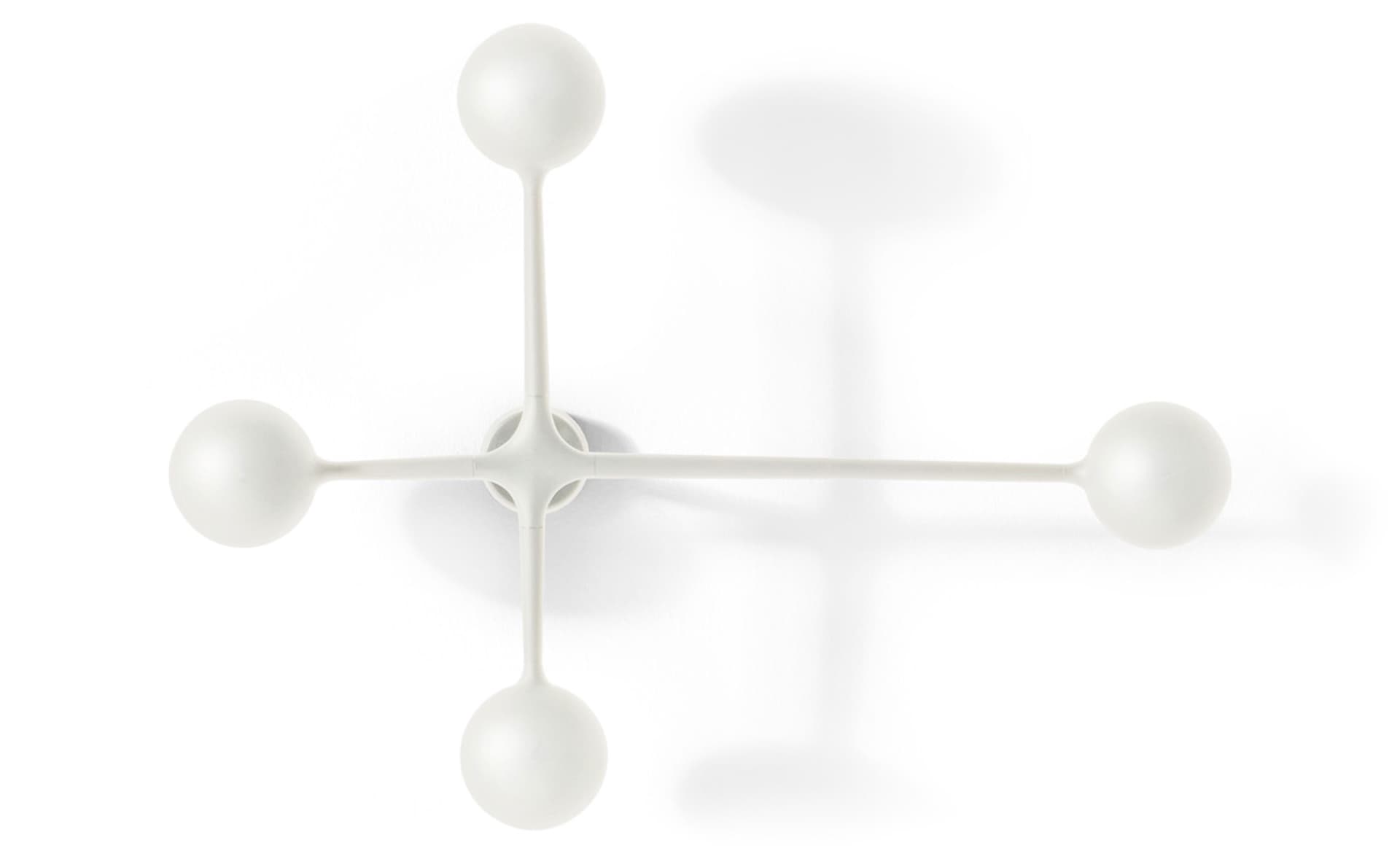
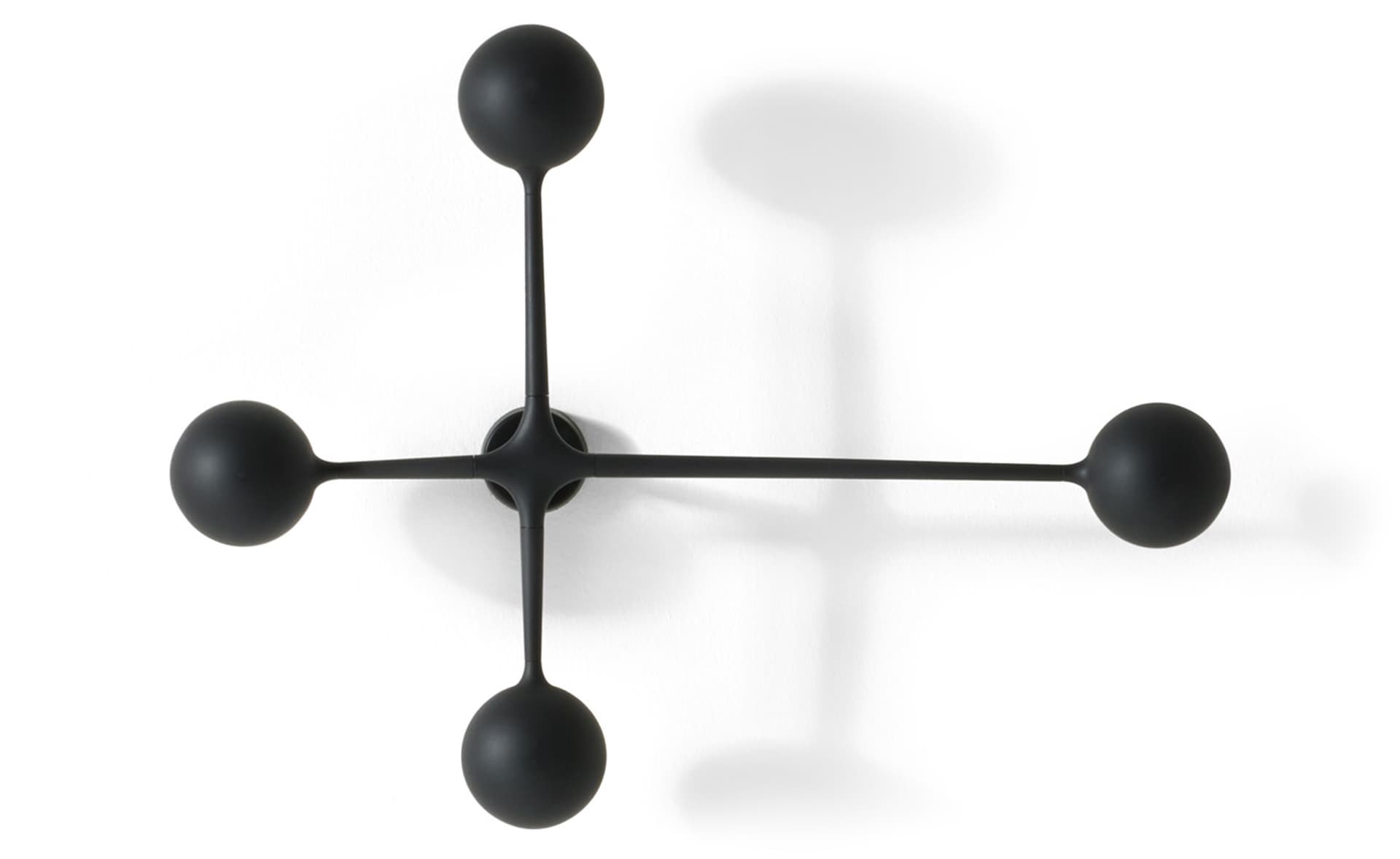
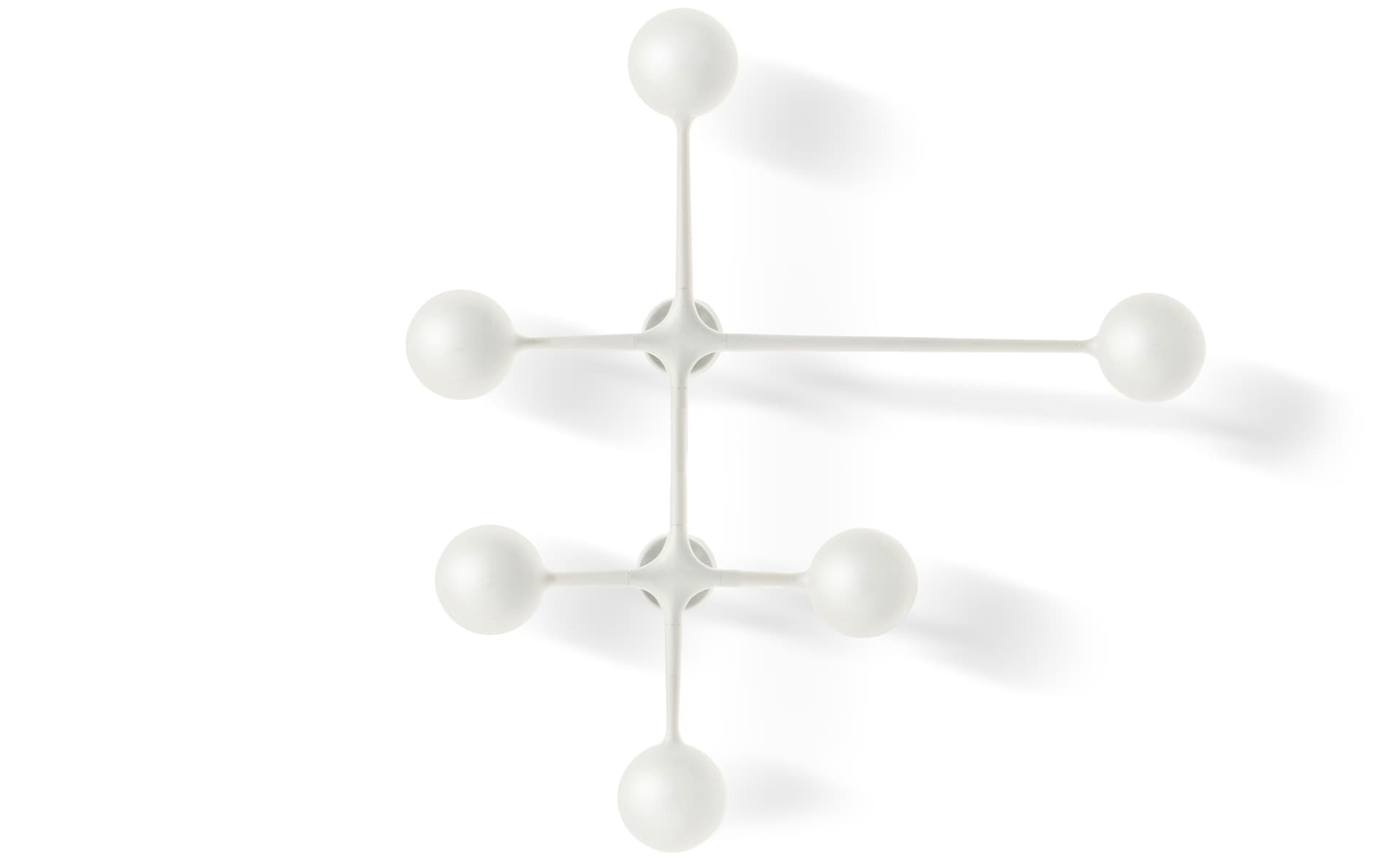
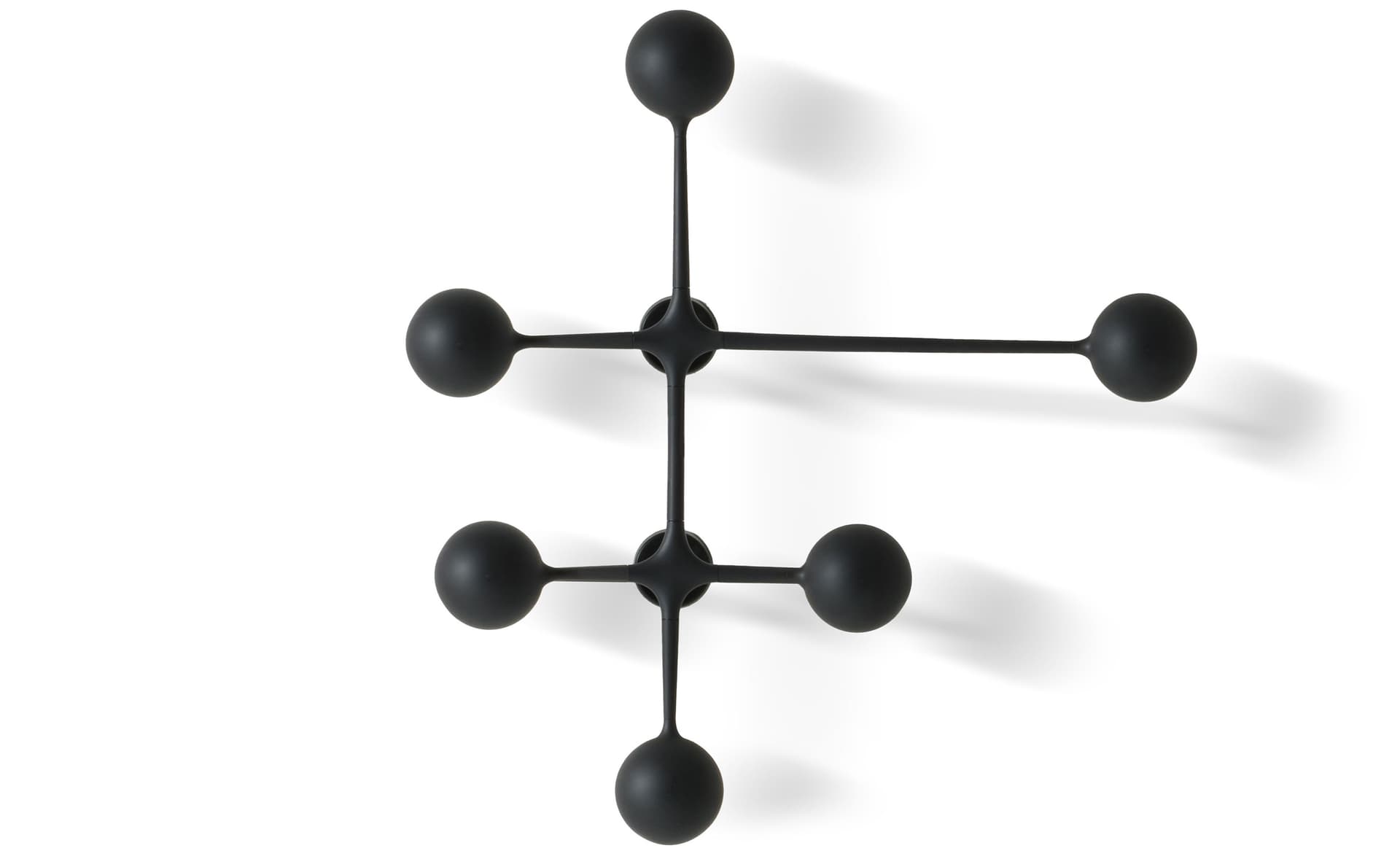
The Dot Pattern, which was initially created for a textile design competition launched in 1947 by the Museum of Modern Art in New York, has become the most famous Eames motif and a recurring theme throughout all their production. It reproduces a number of abstract cross-shaped compositions, achieved with tapered lines and solid dots.
The shape and rhythm resemble musical notes, and also the Plywood Chairs, characterized by tubular steel frames, shock mounts and rounded seats and backrests. After 1947, the combination of lines and dots became a recurring theme in the couple's work, appearing for example in the children's Hang-It-All coat rack from 1953, and in the Multiplication Machine installation created for the Mathematica exhibition in 1961.
Charles and Ray Eames explored the use of the Dot Pattern for some showroom projects between 1949 and 1954 but the lamps were never put into production. Thanks to a joint initiative between the Eames Office and Cassina, a collection of wall/ceiling lamps and suspension lamps was created that combine modern technology and the American couple's original graphic design.
Pre-configured variants of this product
You may also like these products
For more than two decades, hive has been a trusted partner to architects and interior designers who refuse to compromise on quality. We offer expert consultation, project quotes, and dedicated support by phone and email — alongside online trade pricing for immediate access to your member benefits.
Join the Trade Professionals Program